The Problem
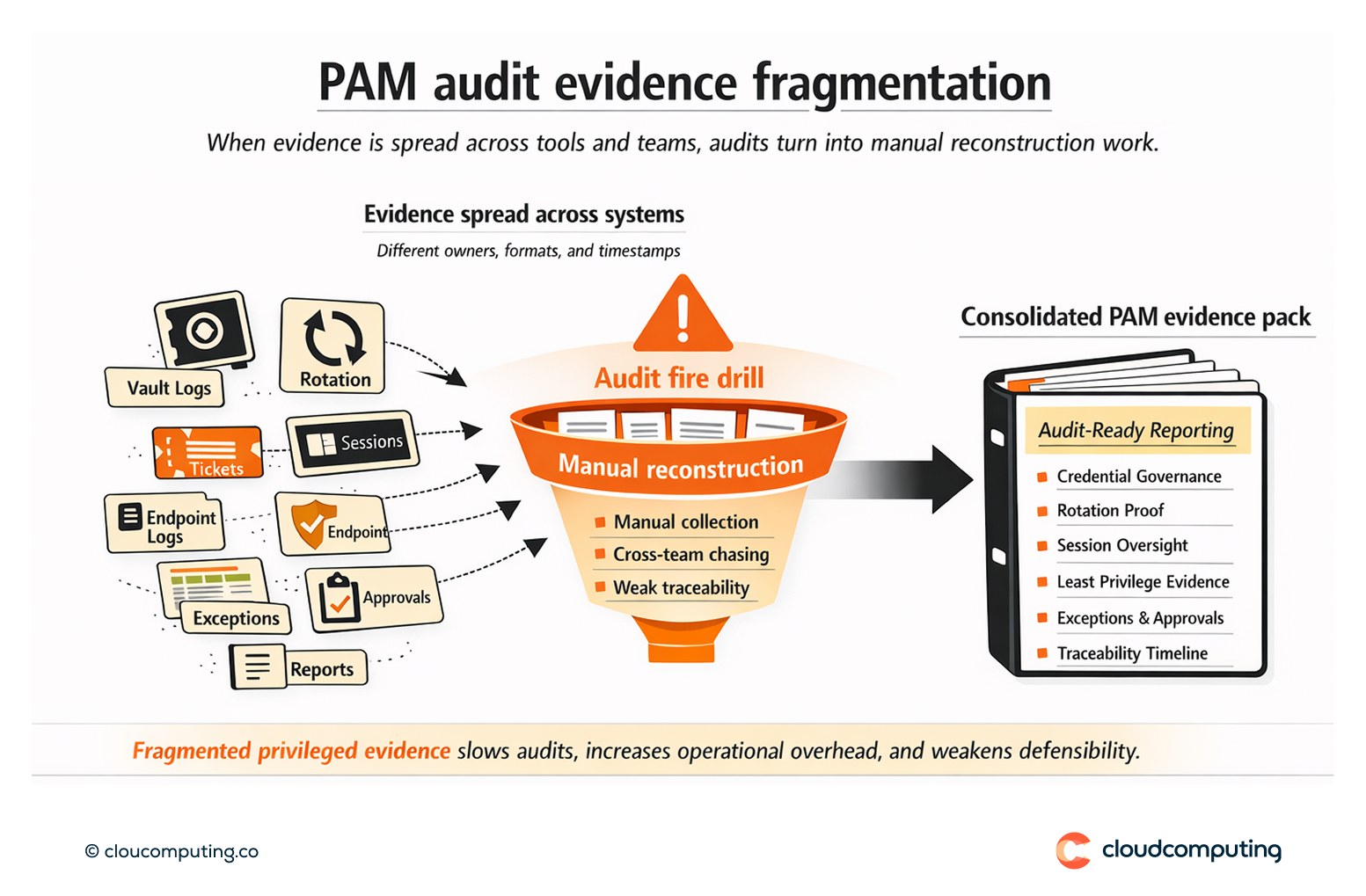
Audits become fire drills when evidence is fragmented across tools and teams.
Organisations spend time reconstructing who accessed what, whether credentials rotated, which sessions were monitored, and how least privilege was enforced.
This disrupts operations and increases audit fatigue.
How we solve it: Standardise privileged controls and align reporting so evidence is repeatable and defensible for audits.
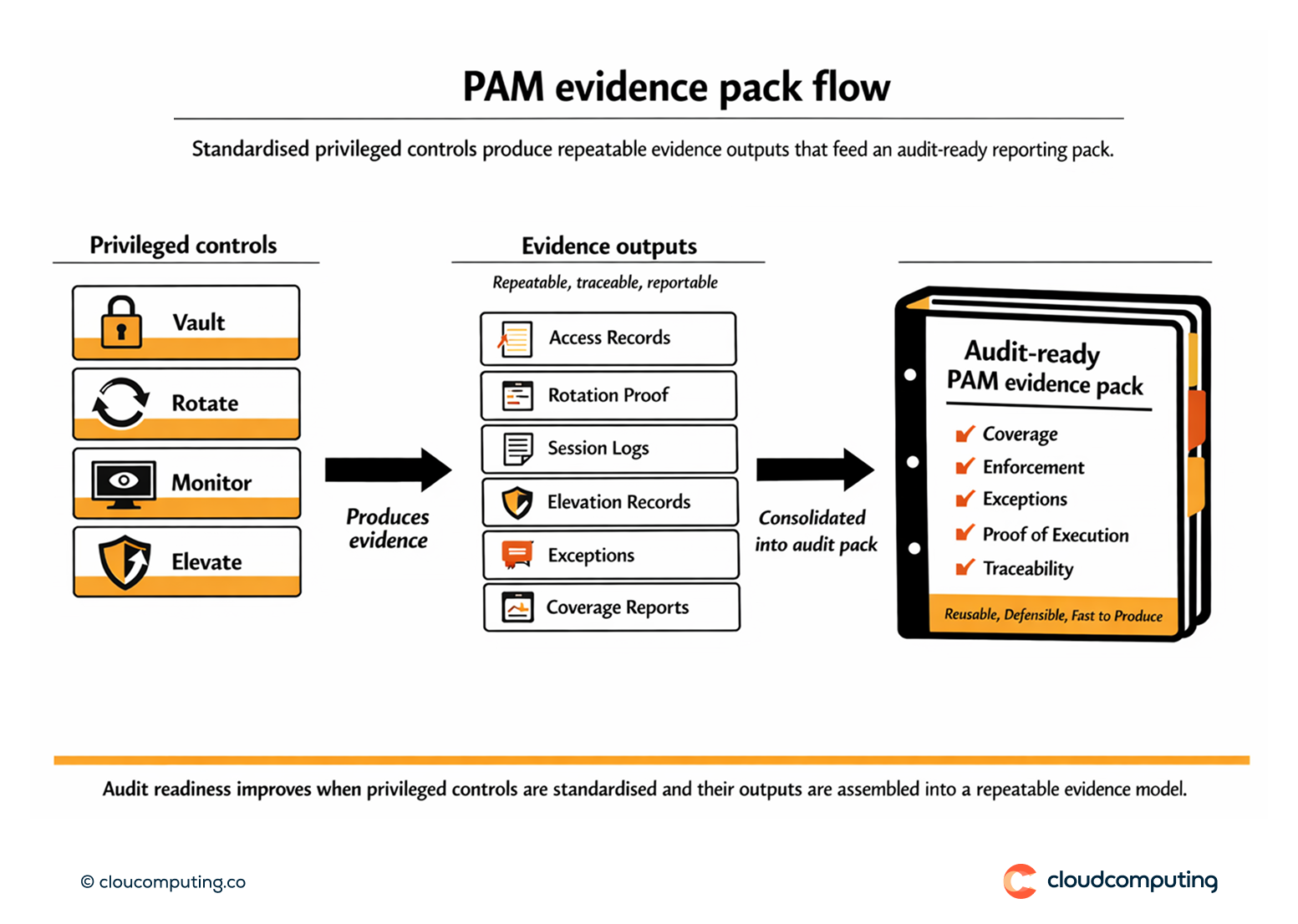
We build an evidence model across vaulting, rotation, session oversight, and least privilege and align reporting to common audit requests.
- Define the privileged evidence model
Standardise what evidence is required for each control and how it is produced. - Reporting aligned to audit narratives
Produce repeatable reports for coverage, enforcement, exceptions, and proof of execution. - Operational readiness
Define retention, access controls, and runbooks so evidence can be produced quickly.
Expected outcome
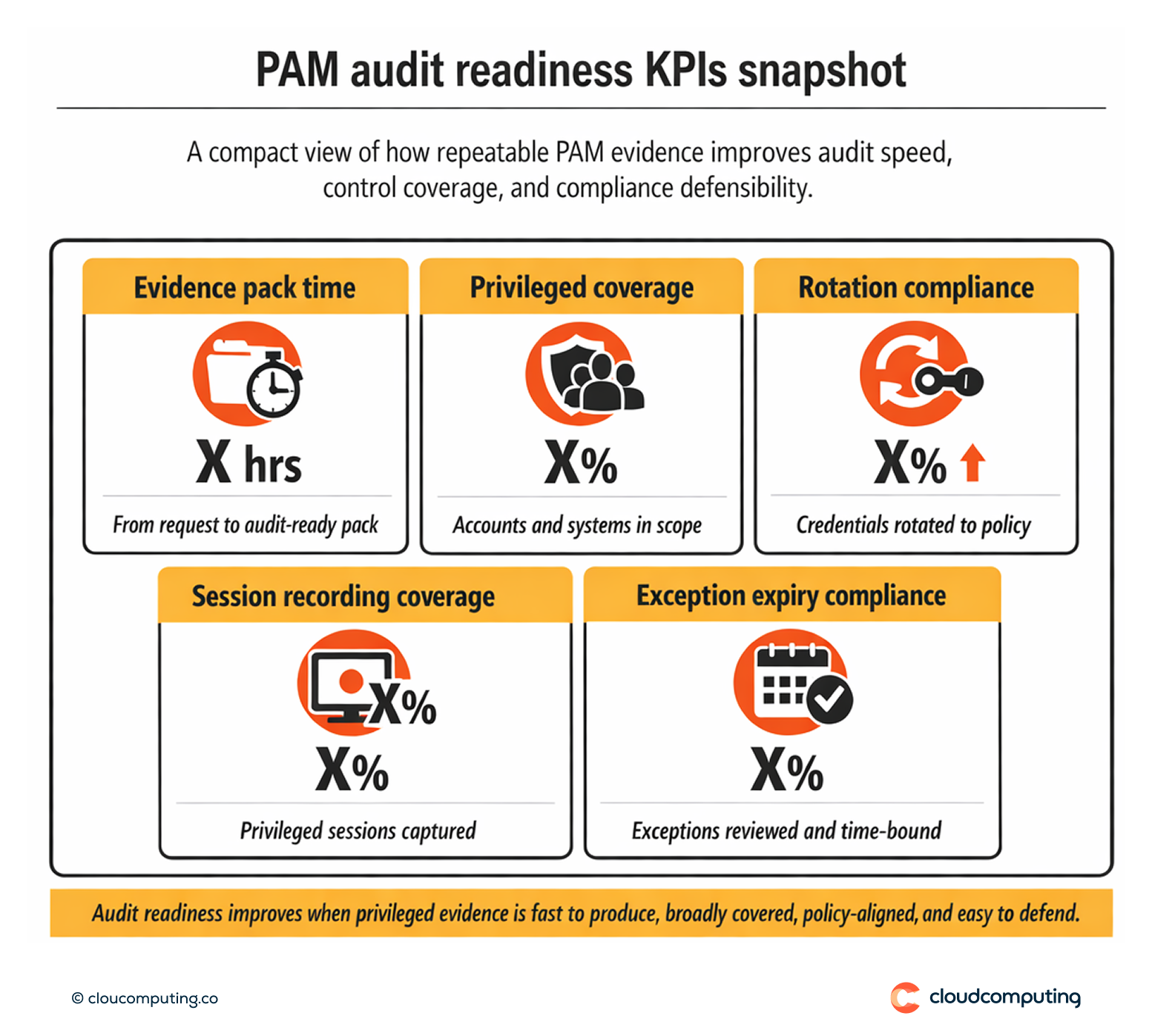
- Faster audits with consistent, reusable evidence packs
- Stronger evidence across privileged controls with clear traceability
- Reduced audit fatigue by removing manual reconstruction work
- Improved compliance posture through defensible privileged access narratives
Quick Answers
What is audit-ready PAM evidence?
Evidence that shows privileged access is controlled: credentials are governed and rotated, sessions are overseen, and privilege is limited with traceability.
Why do PAM audits create fatigue?
Evidence is often scattered and must be reconstructed under time pressure.
How do you reduce audit disruption?
By standardising controls and producing repeatable reporting packs aligned to audit questions.