The Problem
Organisations react late to performance issues, crashes, Wi-Fi instability, and poor employee experience.
Without fleet-wide analytics, teams struggle to correlate symptoms to root causes, prioritise fixes, and prevent recurring incidents.
Support becomes reactive and costly.
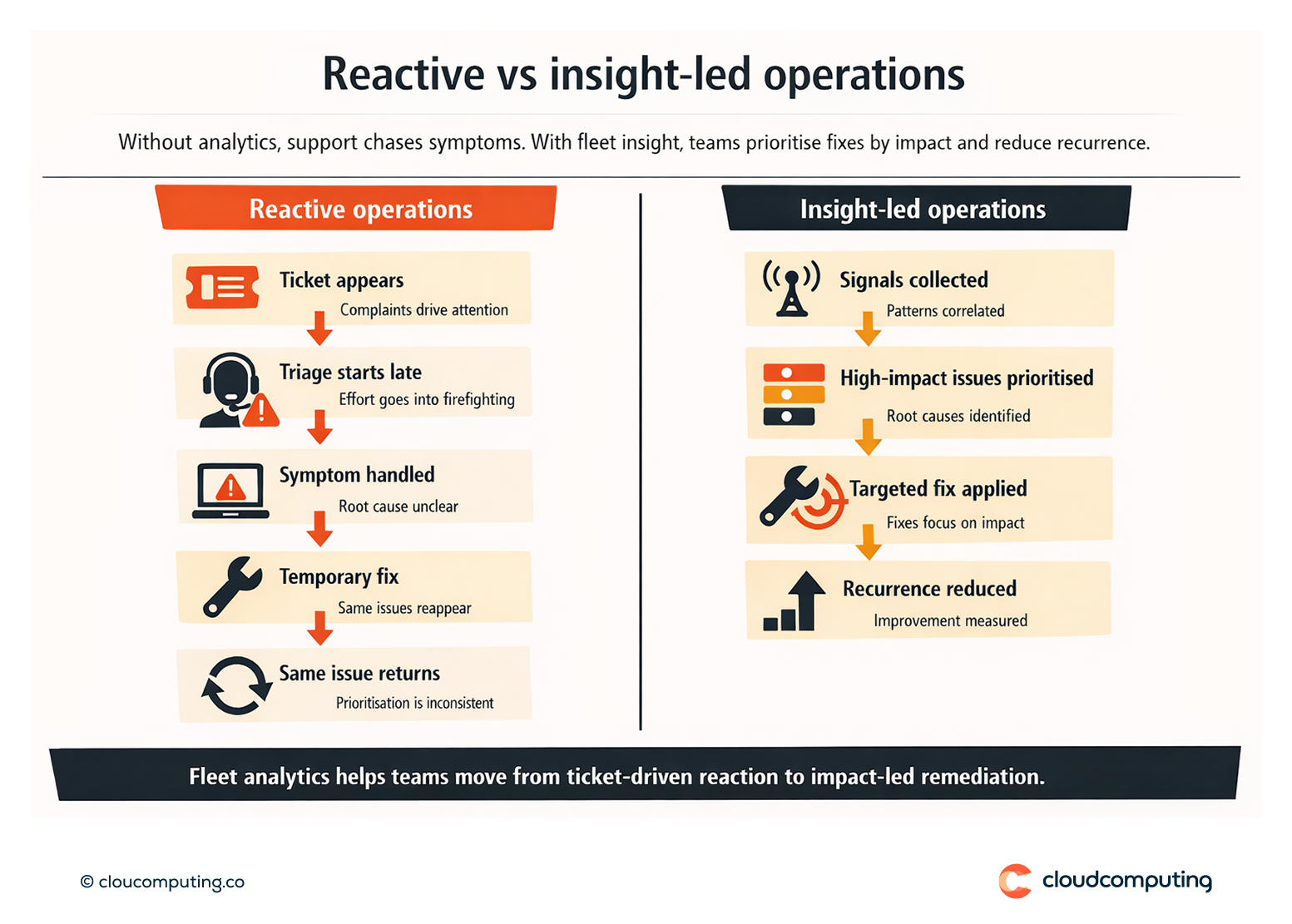
How we solve it: Deploy analytics and experience insights to correlate signals, prioritise fixes, and measure improvement in experience and productivity.
We implement fleet analytics to monitor health, identify recurring issues, and drive targeted remediation.
- Signal collection and correlation
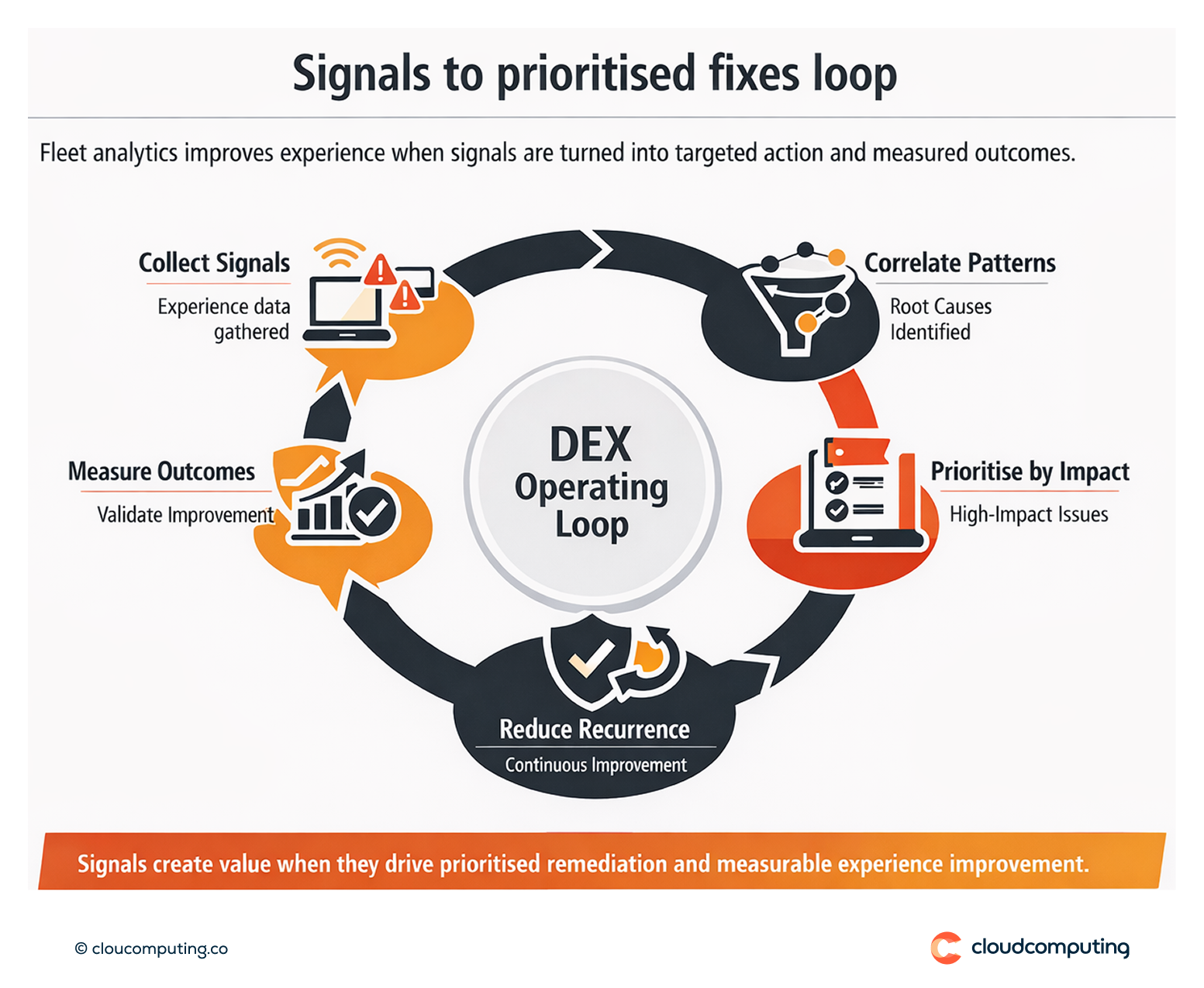
We gather performance, stability, and connectivity signals and correlate them to device models, OS versions, locations, and app versions. - Impact-based prioritisation
We prioritise fixes based on impact to business productivity, not only ticket volume. - Continuous improvement loop
We define recurring issue management: detect → fix → validate → prevent recurrence.
Expected outcome
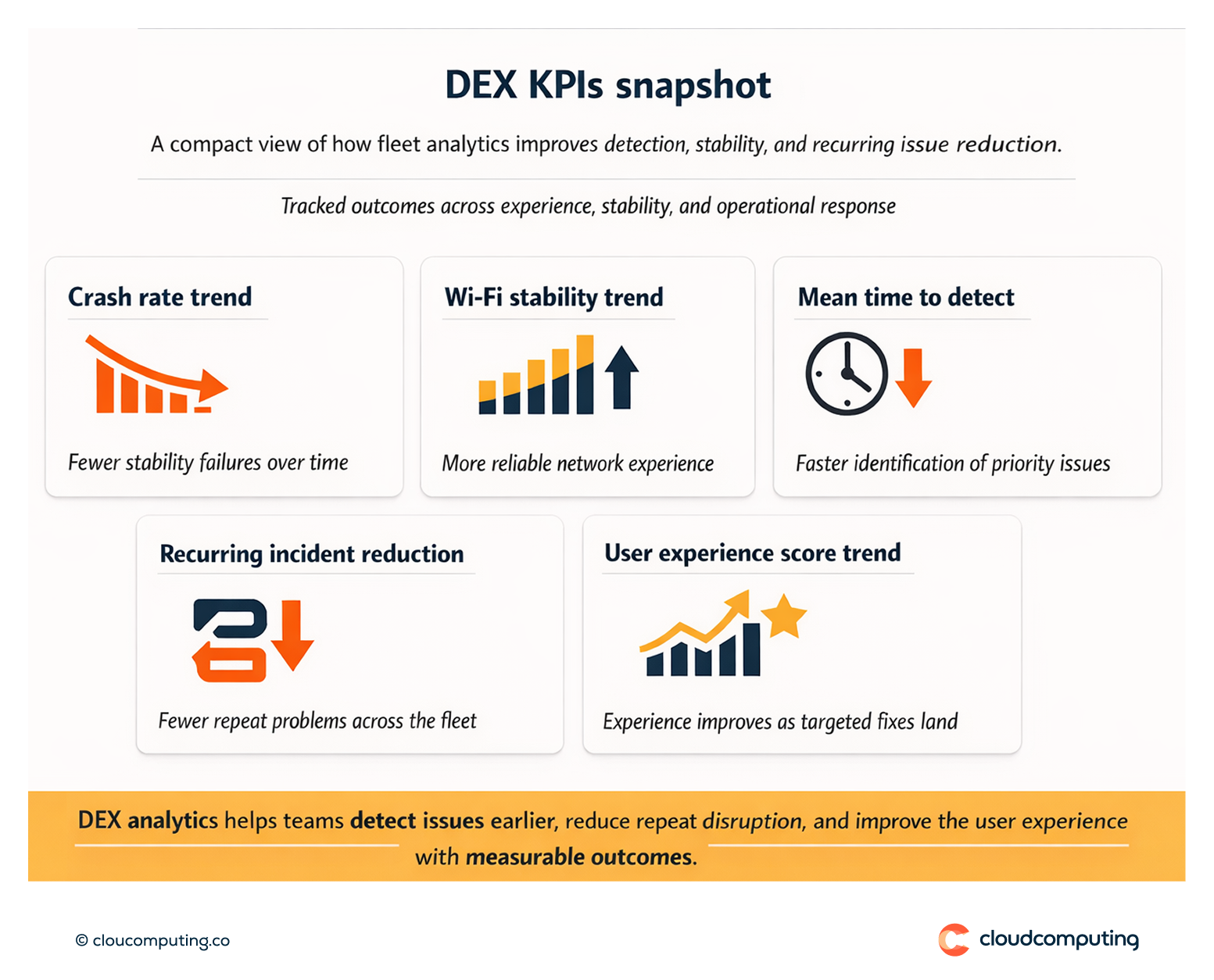
- Fewer recurring incidents through proactive detection and targeted fixes
- Happier users with improved performance and fewer disruptions
- Measurable improvement in experience and productivity through tracked outcomes
- More efficient support by focusing effort on high-impact issues
Quick Answers
What is DEX in device management?
Monitoring and improving device and application experience using analytics, not just support tickets.
Why does analytics reduce incidents?
It identifies patterns and root causes early, enabling targeted fixes that prevent recurrence.
How do you prioritise what to fix?
By correlating issues to business impact: affected users, severity, frequency, and productivity loss.