The Problem
Remote and hybrid work increases troubleshooting time and cost.
Without effective remote actions, teams rely on long support calls, device returns, and onsite interventions.
Downtime increases and users lose productivity.
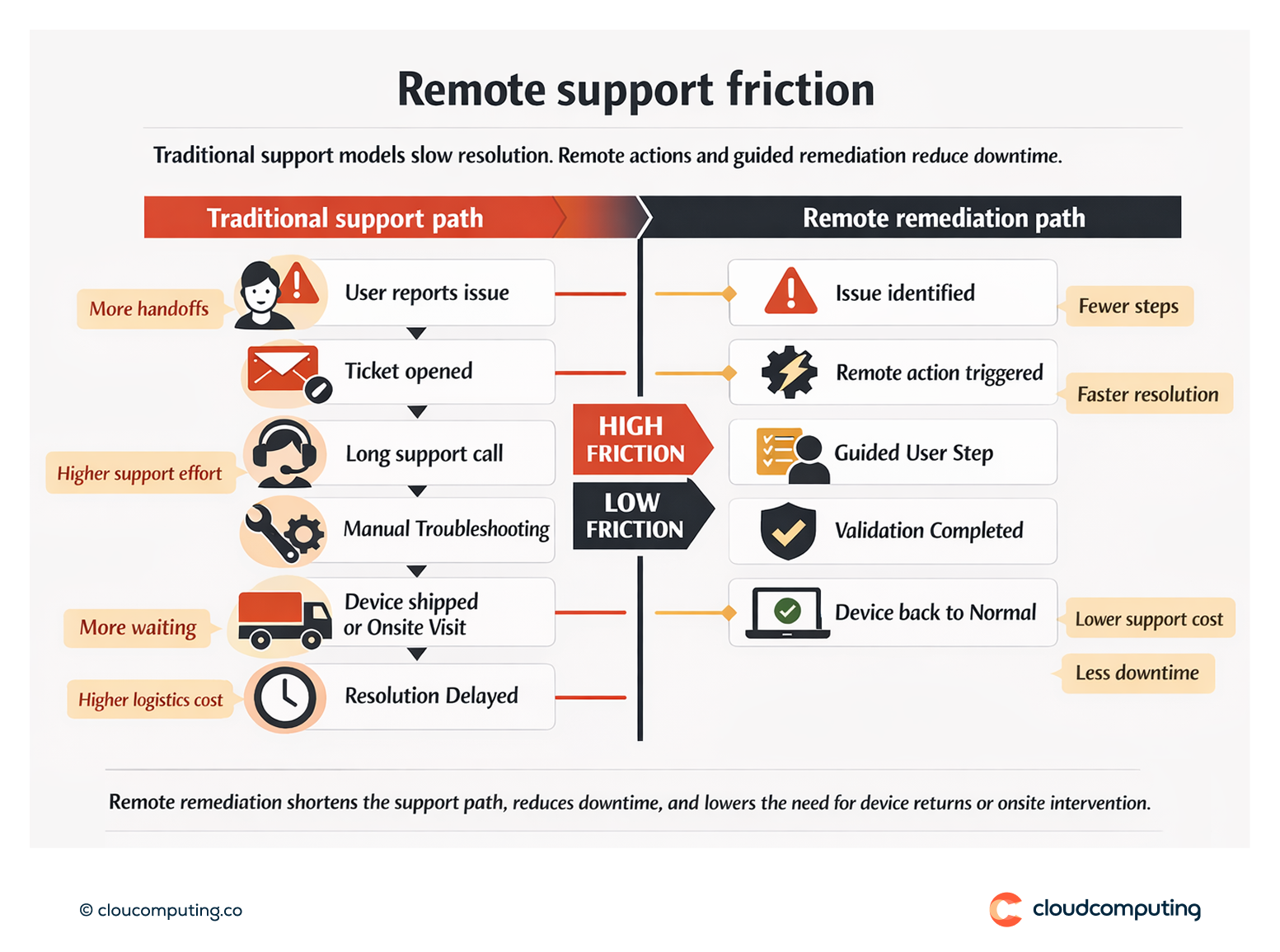
How we solve it: Enable remote actions, guided remediation, and streamlined support workflows to resolve issues quickly at scale.
We implement remote support capabilities that allow IT to act without physical access.
- Remote actions and scripts
We enable safe remote commands and automation to fix common issues quickly. - Guided remediation
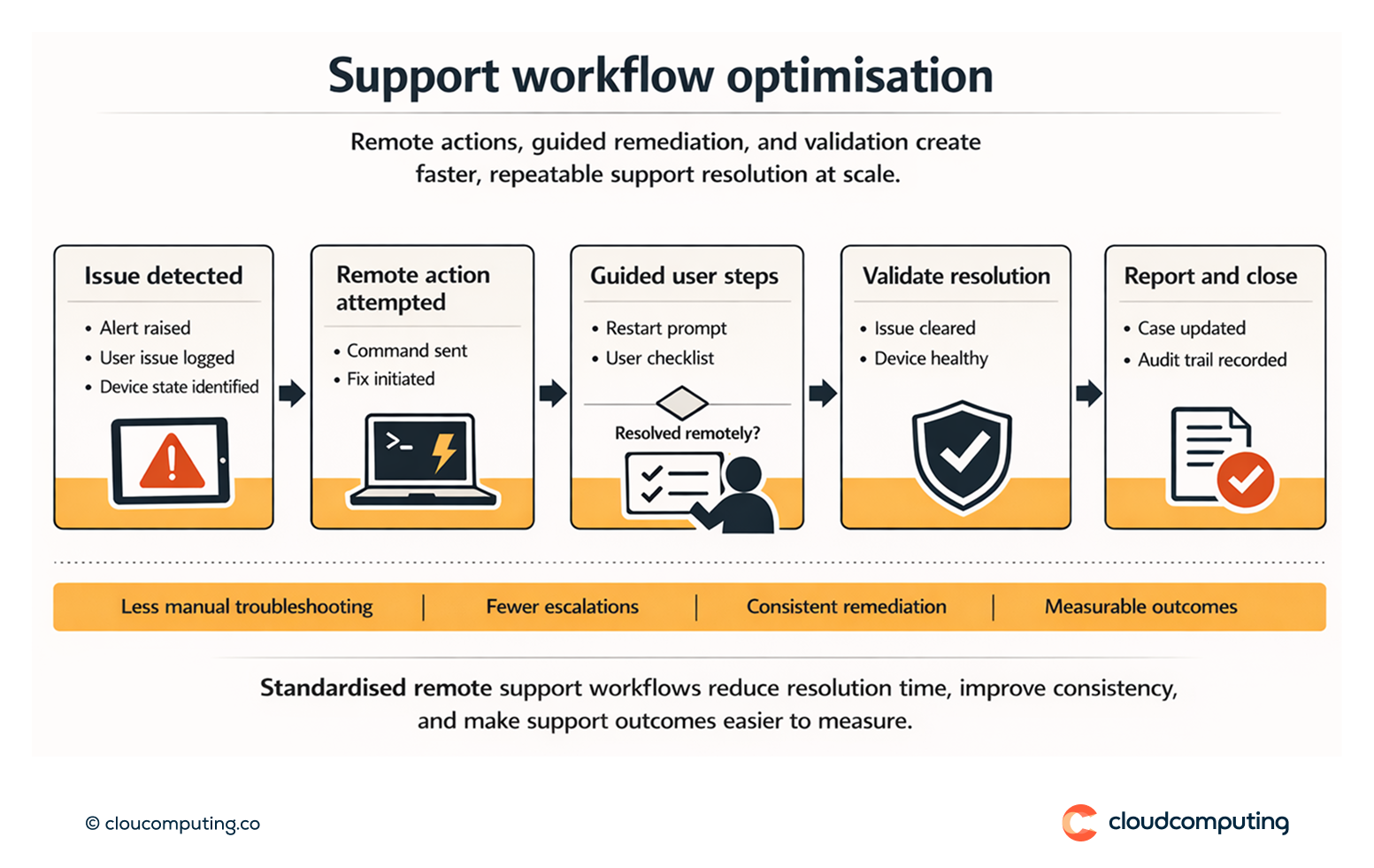
We create user-facing remediation flows and clear instructions for common failures. - Support workflow optimisation
We align device management data with support processes so troubleshooting starts with facts, not guesswork.
Expected outcome
- Faster resolution through remote actions and standard remediation playbooks
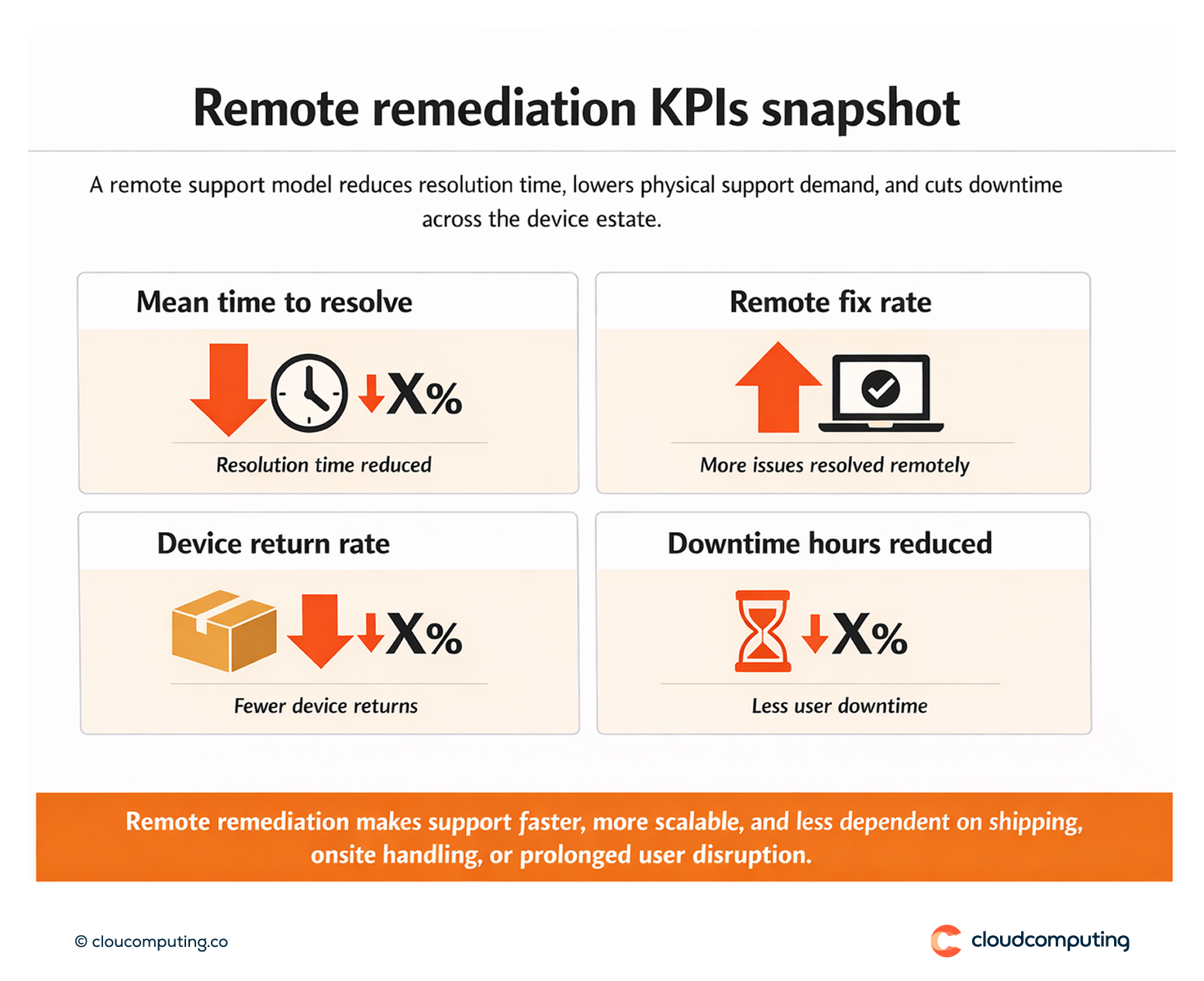
- Fewer device returns and reduced onsite support needs
- Reduced downtime and improved employee productivity
- Lower support costs through repeatable workflows
Quick Answers
What is remote remediation in device management?
The ability to execute actions and fixes on devices without physical access.
Why does it matter for hybrid work?
It reduces downtime and eliminates expensive logistics such as shipping and onsite support.
How do you keep remote actions safe?
Through role-based access, controlled scripts, and audited workflows.