The Problem
Partners need access, but onboarding and controls are inconsistent.
Each partner integration becomes bespoke, scopes are unclear, and credentials are managed ad hoc.
This slows enablement and increases risk of over-exposure.
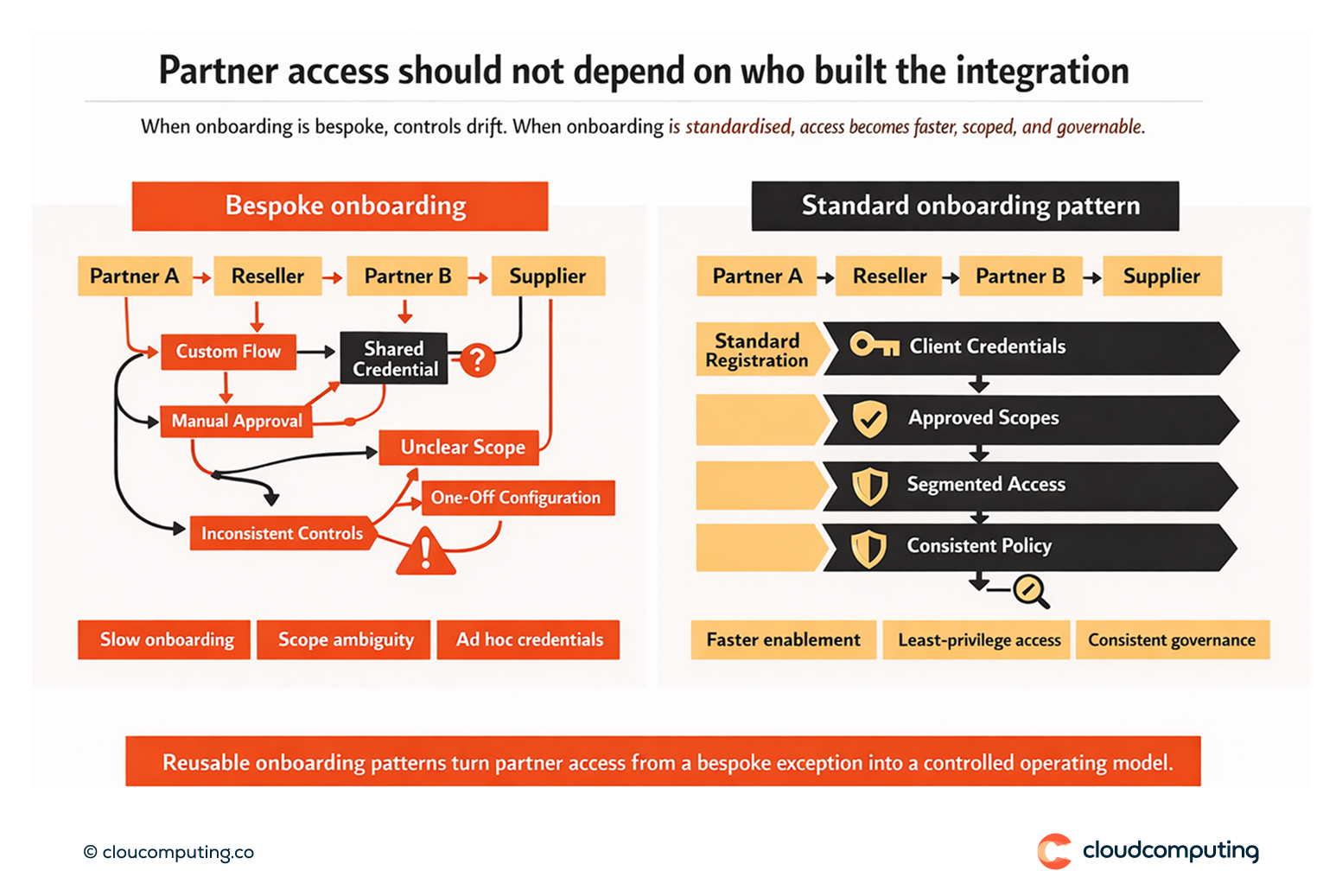
How we solve it: Use partner onboarding patterns, scoped access, client credentials, and policy-based segmentation for external exposure.
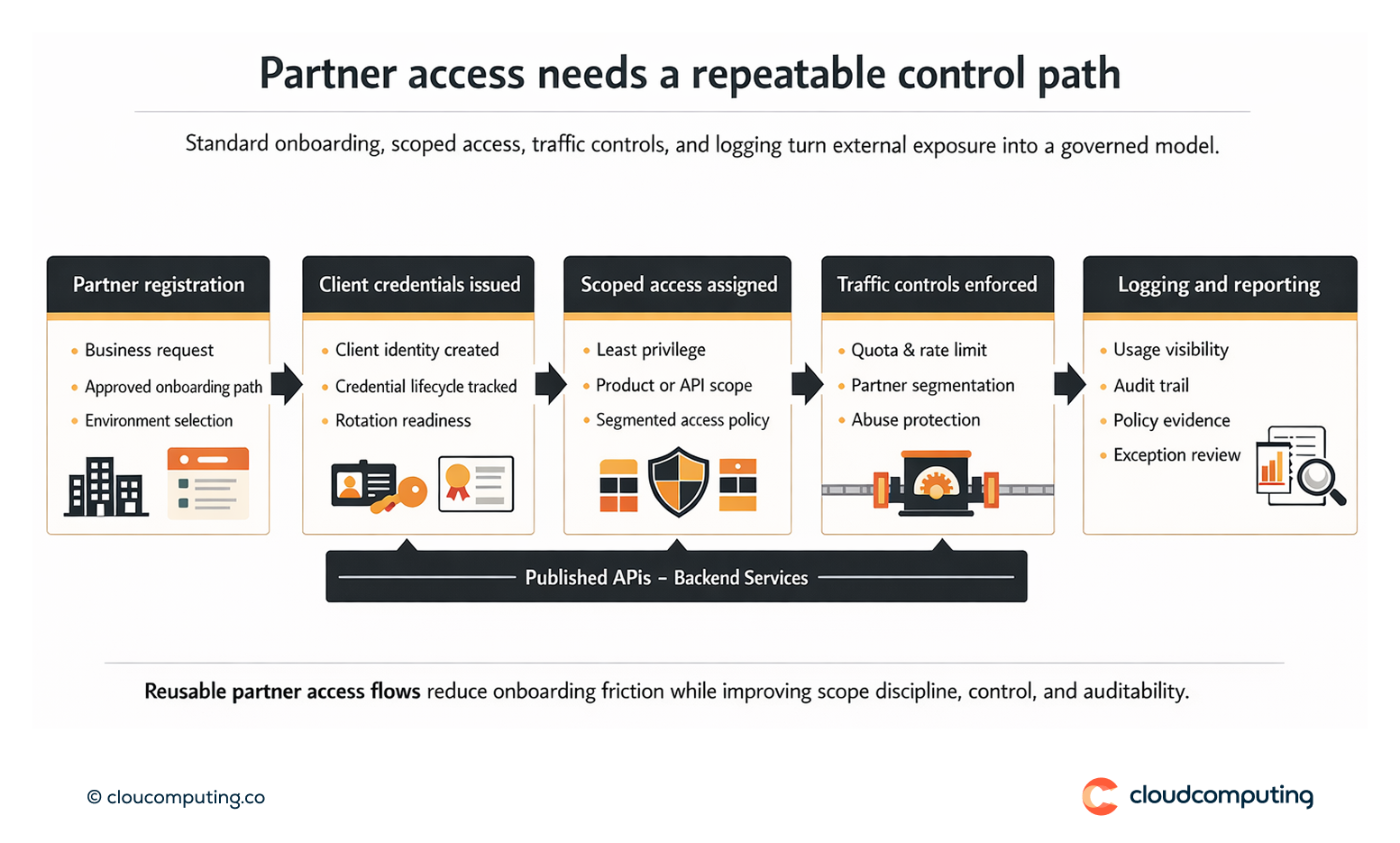
We implement a partner model that scales: standard onboarding journeys, segmented access, and enforceable policies.
- Partner onboarding templates
Define standard steps for registration, credential issuance, and environment access. - Scoped access and segmentation
Apply least privilege through scopes, products, and segmented policies. - Client credentials and governance
Standardise client identity management, rotation practices, and revocation readiness.
Expected outcome
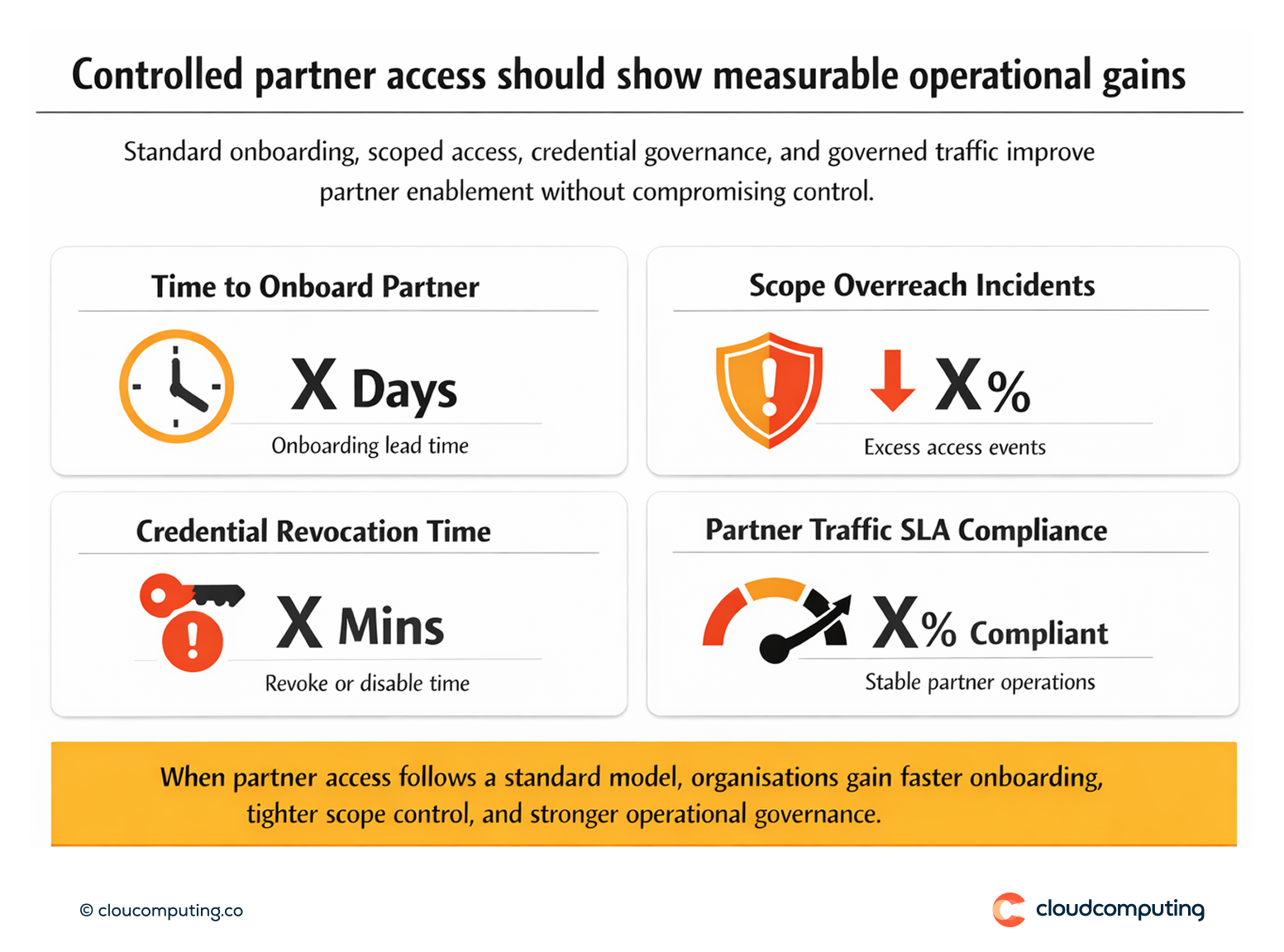
- Faster partner enablement through reusable onboarding patterns
- Strong guardrails via scoped access and segmented policies
- Reduced over-exposure risk by standardising least privilege
- Improved operational control through consistent credential governance
Quick Answers
What is controlled external API exposure?
Making APIs available to partners under scoped access, consistent policy, and observable governance.
Why do partner integrations often become risky?
Because onboarding is bespoke and least privilege is not enforced consistently.
What is client credentials used for?
Service-to-service partner access where an application, not a user, authenticates to an API.