The Problem
Passwords create friction and cost. Users forget them, reset them, and reuse them. This drives lockouts, support demand, and drop-off during sign-in and sign-up.
Passwords also increase exposure to credential stuffing and phishing, which contributes to fraud and account takeover in customer-facing platforms.
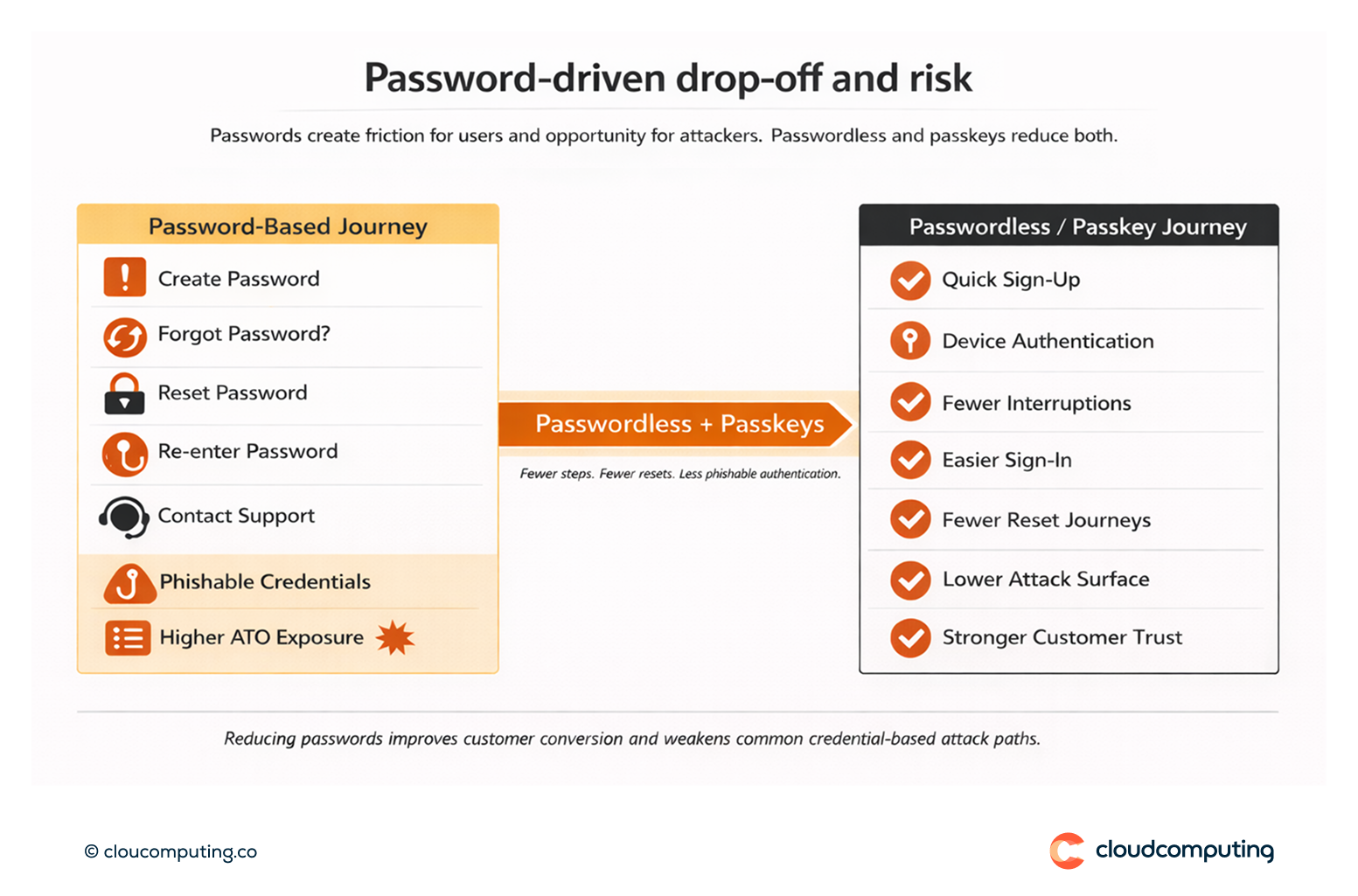
How we solve it: Roll out passwordless journeys and passkeys for priority channels and cohorts, with resilient recovery and policy controls.
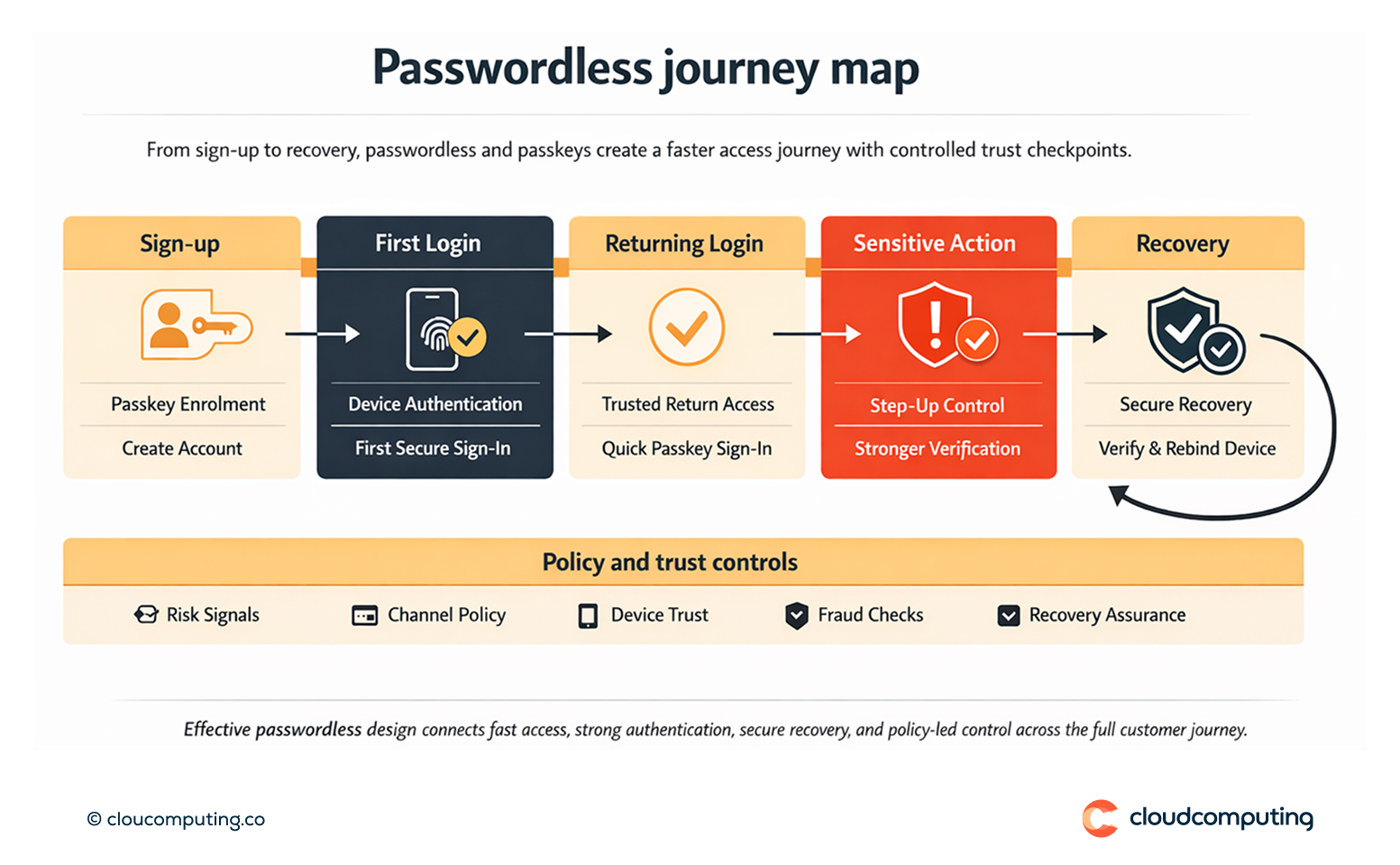
We implement passwordless as a programme: choose the right flows per channel, introduce passkeys where they fit, and ensure recovery remains secure and usable.
- Cohort and channel prioritisation
We target the cohorts and journeys where passwordless delivers the highest value: high-frequency users, high-risk segments, mobile-first flows, and high-velocity sign-up funnels. - Passkeys and passwordless journey design
We design sign-up, sign-in, and re-authentication experiences that minimise friction while maintaining security for sensitive actions. - Recovery and fallback that maintains trust
We implement secure recovery journeys so device change, factor loss, and account recovery are handled without creating weak bypass paths. - Measurement and iterative optimisation
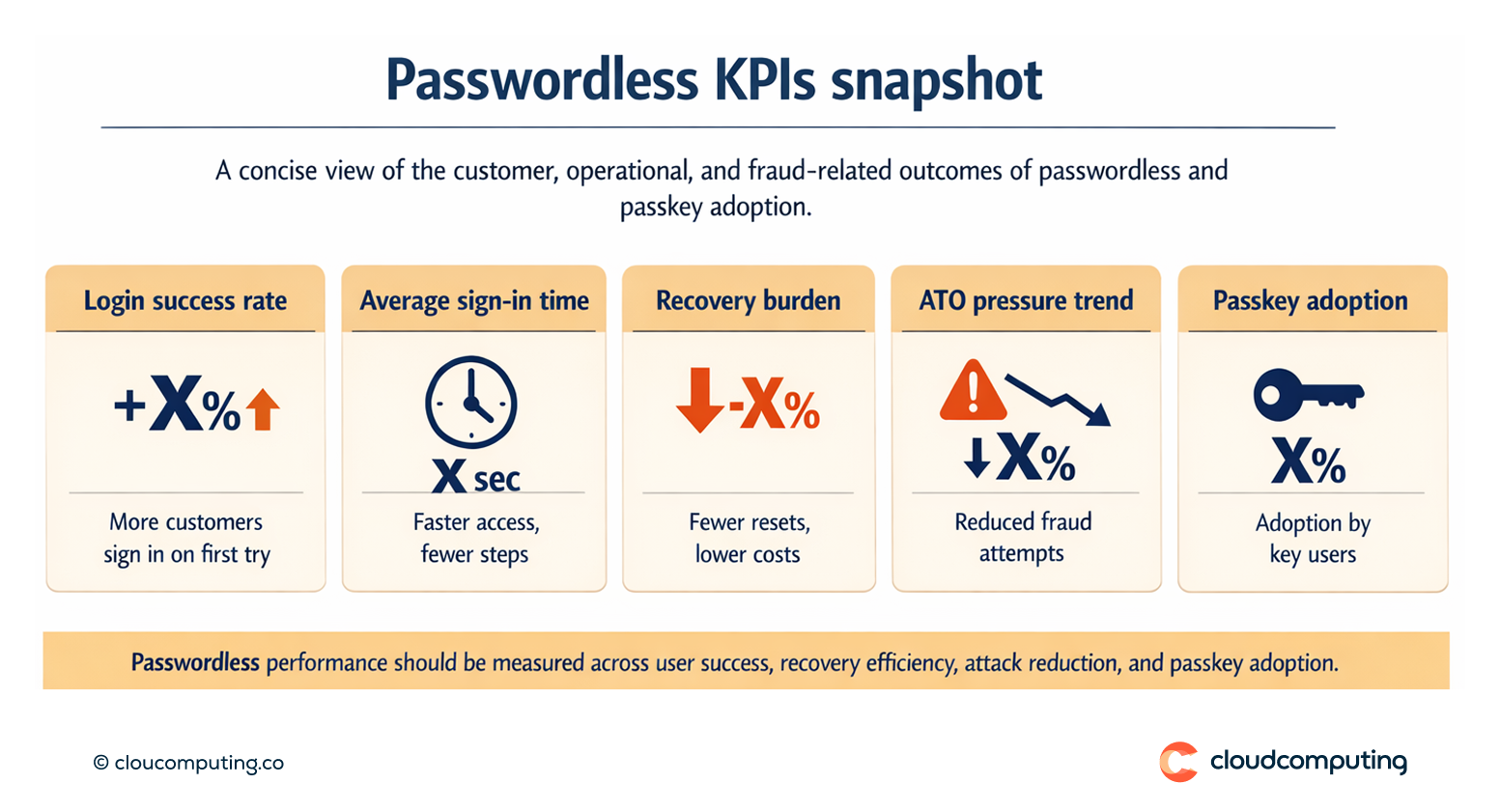
We monitor completion rates, fraud signals, and recovery costs, adjusting flows to improve outcomes over time.
Expected outcome
- Improved UX with faster sign-in and fewer abandoned sessions
- Stronger authentication by reducing reliance on phishable credentials
- Lower account recovery costs through fewer lockouts and password reset journeys
- Reduced fraud pressure as credential-based attacks become less effective
Quick Answers
What is a passkey in a customer identity context?
A modern sign-in method that reduces reliance on passwords and improves user experience, typically using device-supported authentication.
Does passwordless eliminate fraud?
It reduces exposure to password-based attacks, but fraud controls still need to address automation, anomalous activity, and high-risk actions.
What is the most common failure point in passwordless rollouts?
Weak recovery design that introduces friction or creates bypass risk.