The Problem
Inconsistent login experiences across web, mobile, and different product surfaces reduce trust and conversion.
Users see different flows, different requirements, and inconsistent error handling by channel.
Security controls also vary when teams implement login separately per app, creating uneven enforcement and avoidable risk.
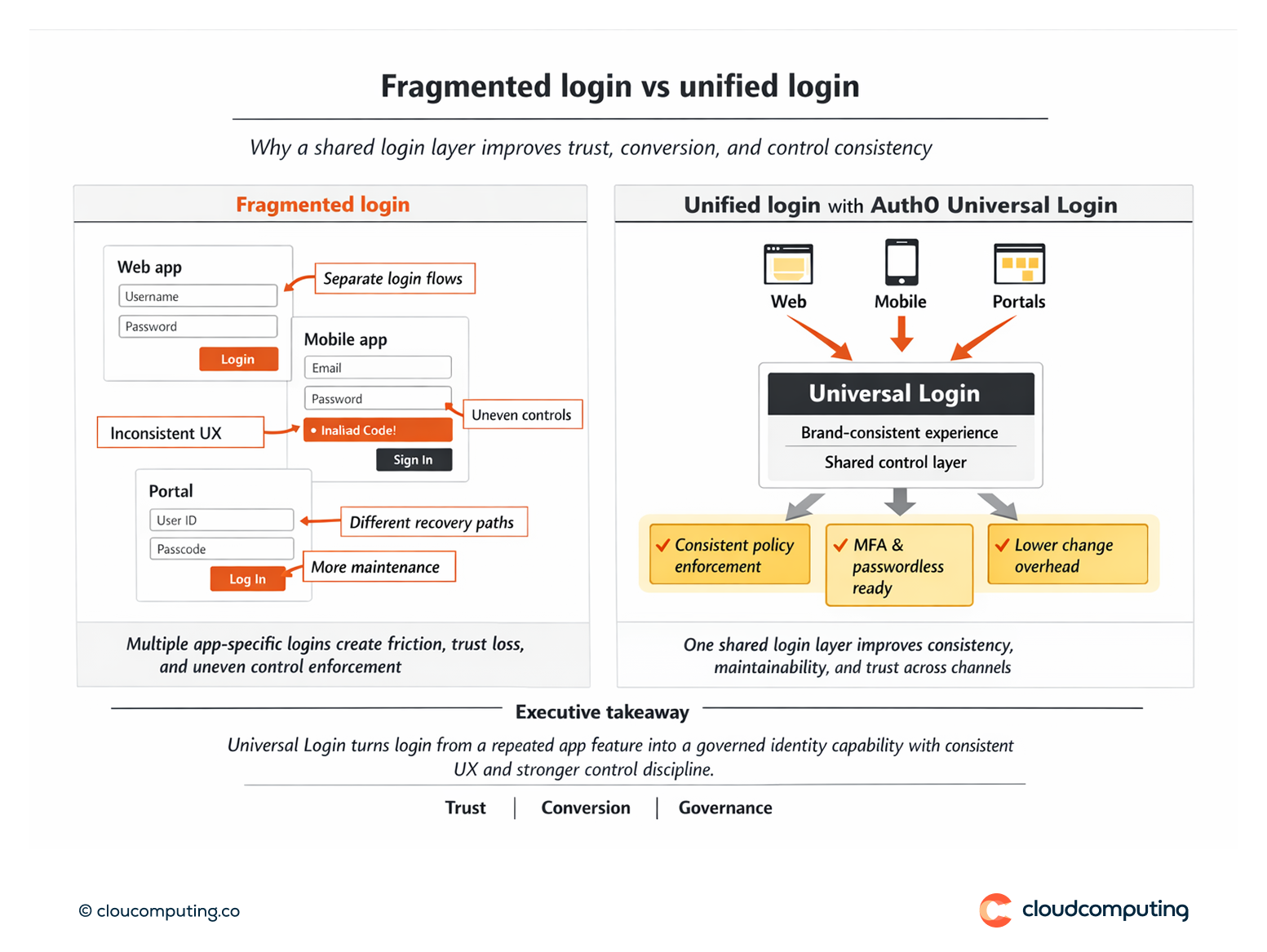
How we solve it: Implement Auth0 Universal Login with brand-aligned experiences and optional per-tenant customisation for B2B.
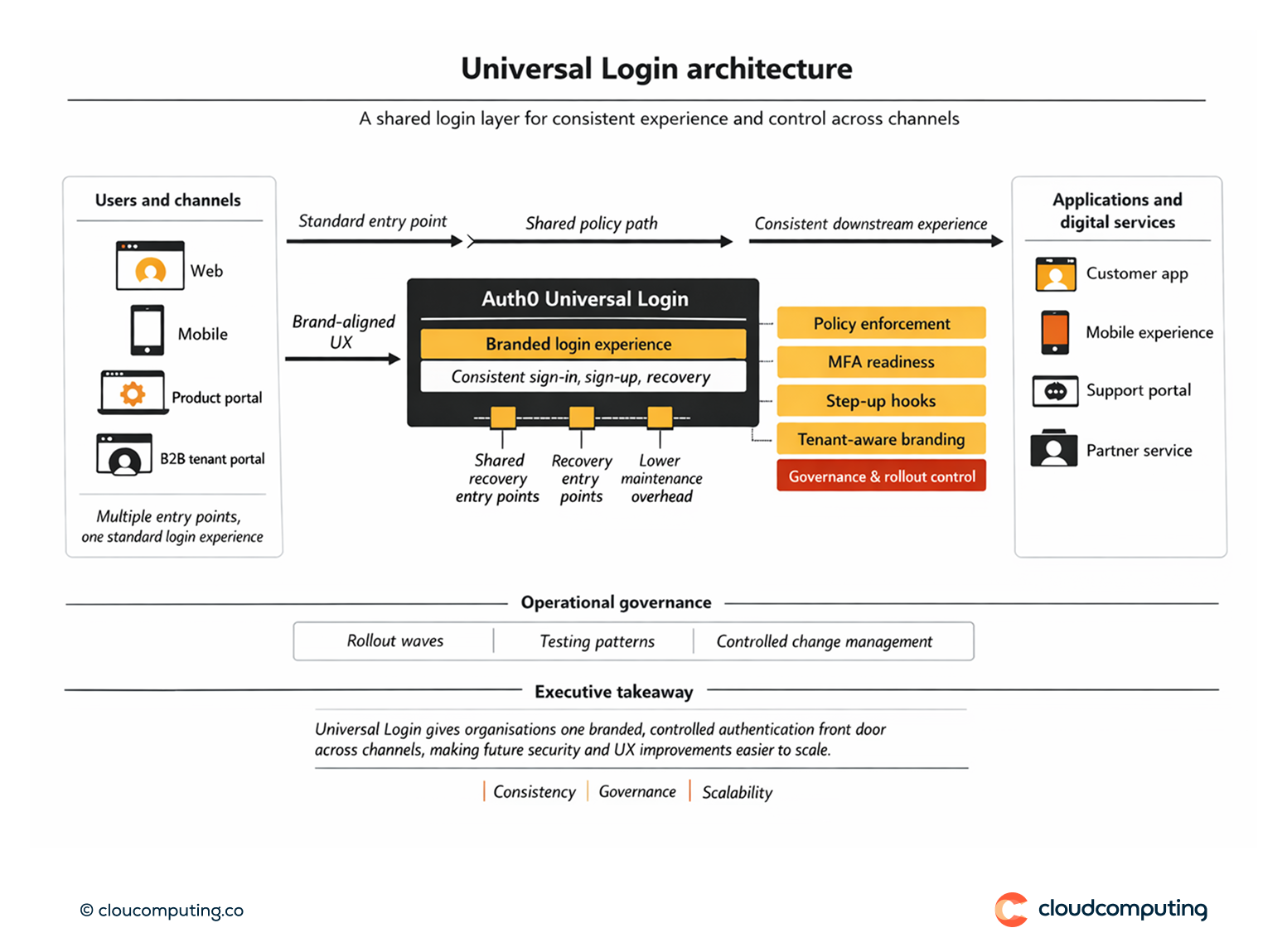
We deploy Universal Login as the standard entry point across channels, aligning design, messaging, and control enforcement while keeping the implementation maintainable.
- Brand-aligned login design system
We apply consistent styling, content, and UX patterns across sign-in, sign-up, error states, and recovery entry points. - Policy consistency across channels
We standardise which controls apply where (e.g., MFA readiness, step-up hooks, recovery requirements), avoiding channel-specific drift. - B2B tenant-aware branding (where required)
For B2B, we support tenant-specific branding and UX variations that preserve governance and maintainability. - Operational rollout and governance
We define rollout waves, testing patterns, and change control so future changes remain consistent and low-risk.
Expected outcome
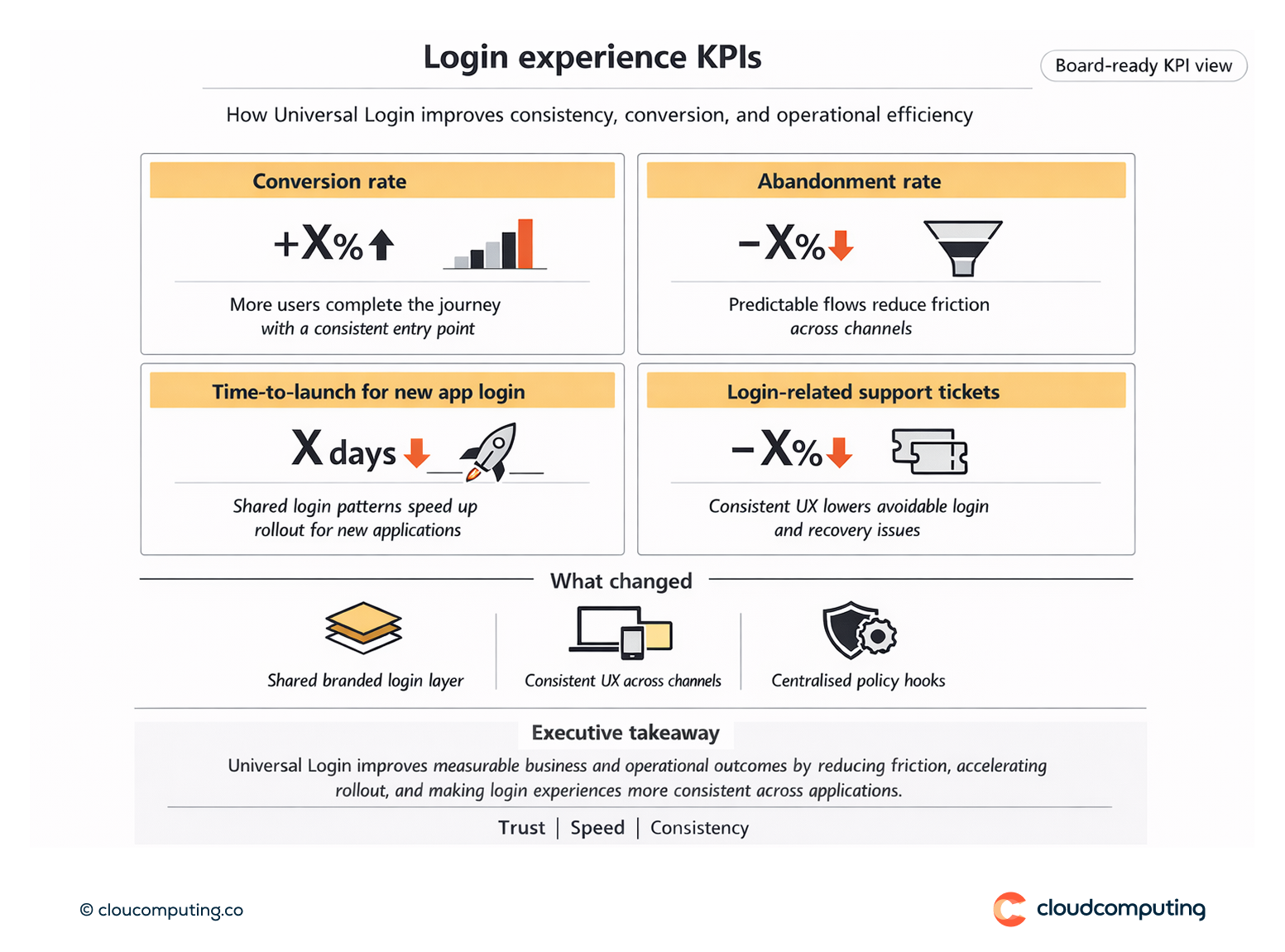
- Faster rollout by standardising login as a shared capability rather than rebuilding per app
- Consistent UX that improves trust and reduces abandonment
- Stronger foundation for MFA and passwordless through a unified entry point and consistent policy hooks
- Lower operational overhead with controlled changes and fewer channel-specific regressions
Quick Answers
What is Auth0 Universal Login?
A hosted, centralised login experience that can be branded and used consistently across applications.
Why does a consistent login experience affect conversion?
Users trust predictable flows; inconsistency increases friction and abandonment, especially on sign-up and recovery paths.
How does this support stronger authentication later?
A unified entry point makes it easier to introduce MFA, step-up, and passwordless without redesigning every application.