The Problem
Different rules per platform create gaps and support load. Policies drift across iOS, Android, Windows, and macOS, leading to inconsistent posture, uneven restrictions, and operational complexity.
The organisation spends time troubleshooting “platform exceptions” rather than enforcing a coherent standard.
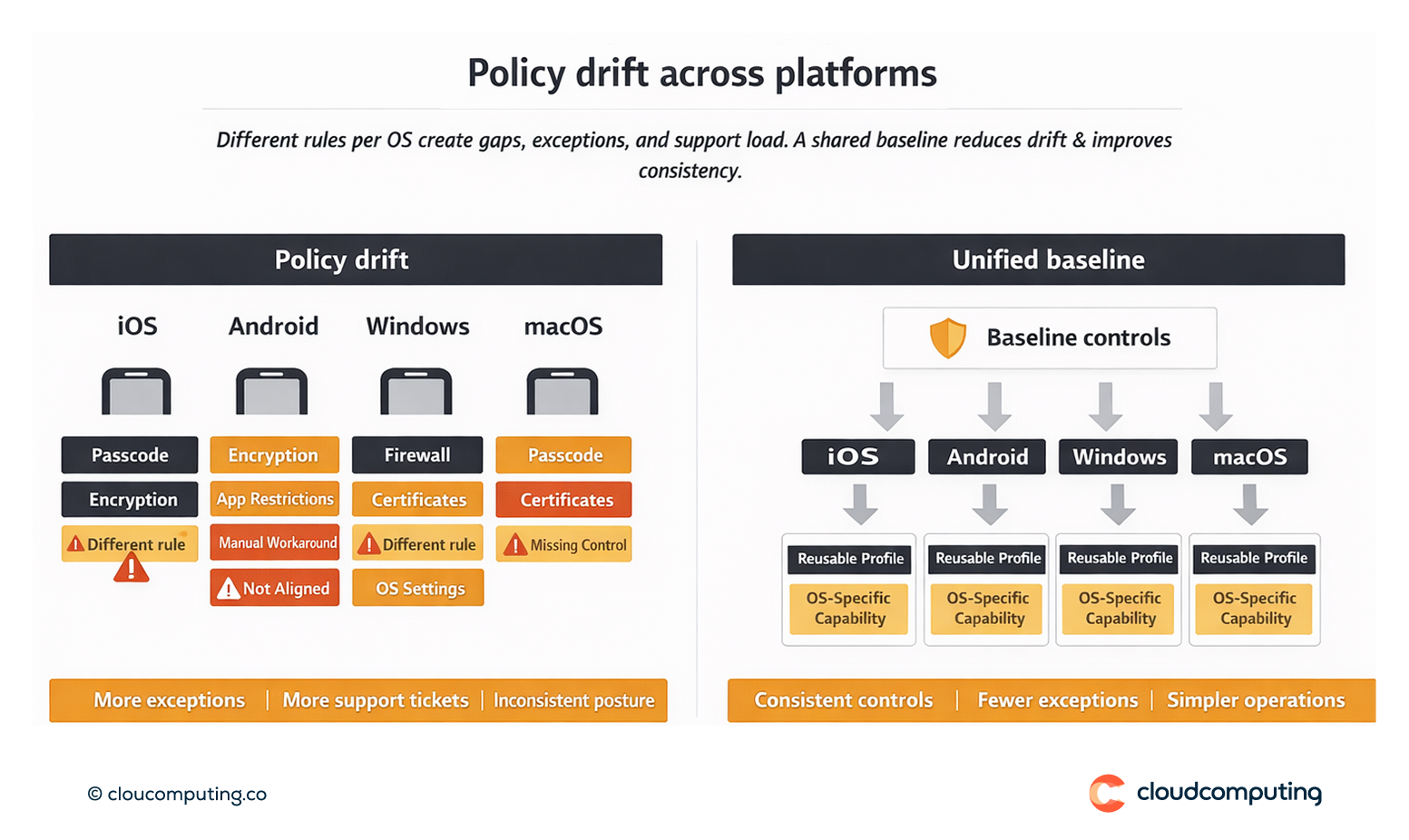
How we solve it: Define baseline policies and reusable configuration profiles across platforms to standardise posture and reduce operational complexity.
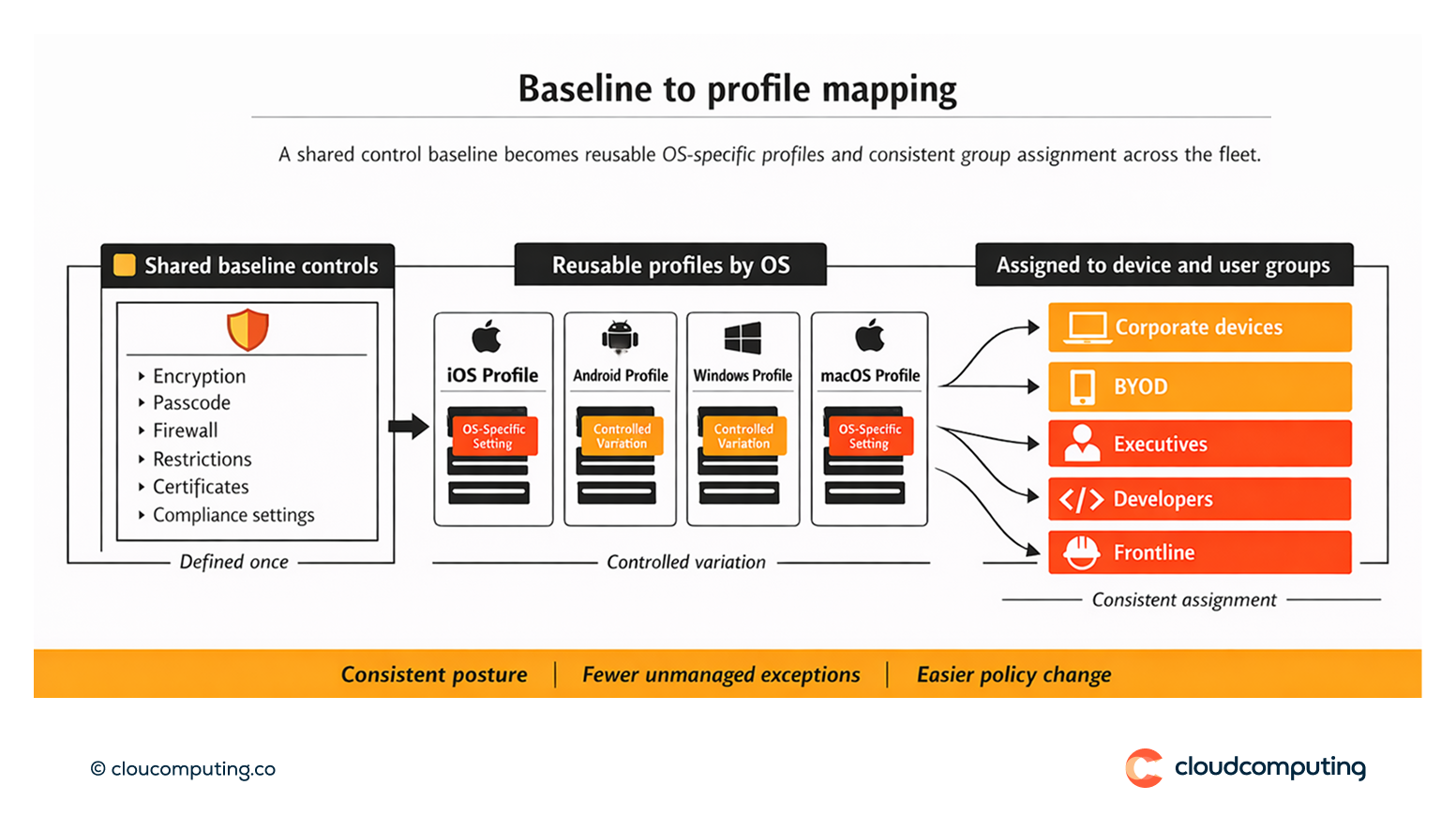
We establish a cross-platform baseline with reusable profiles so the organisation can enforce consistent controls while respecting OS capabilities.
- Baseline definition
We define security and configuration baselines (encryption, passcode, firewall, restrictions, certificates) aligned to risk and compliance needs. - Reusable configuration profiles
We build profiles that can be applied consistently across OS families, with controlled variation only where required by platform limitations. - Change control and governance
We implement versioning and review processes so policy changes remain controlled and testable.
Expected outcome
- Consistent posture across the fleet regardless of operating system
- Fewer incidents driven by configuration gaps and unmanaged exceptions
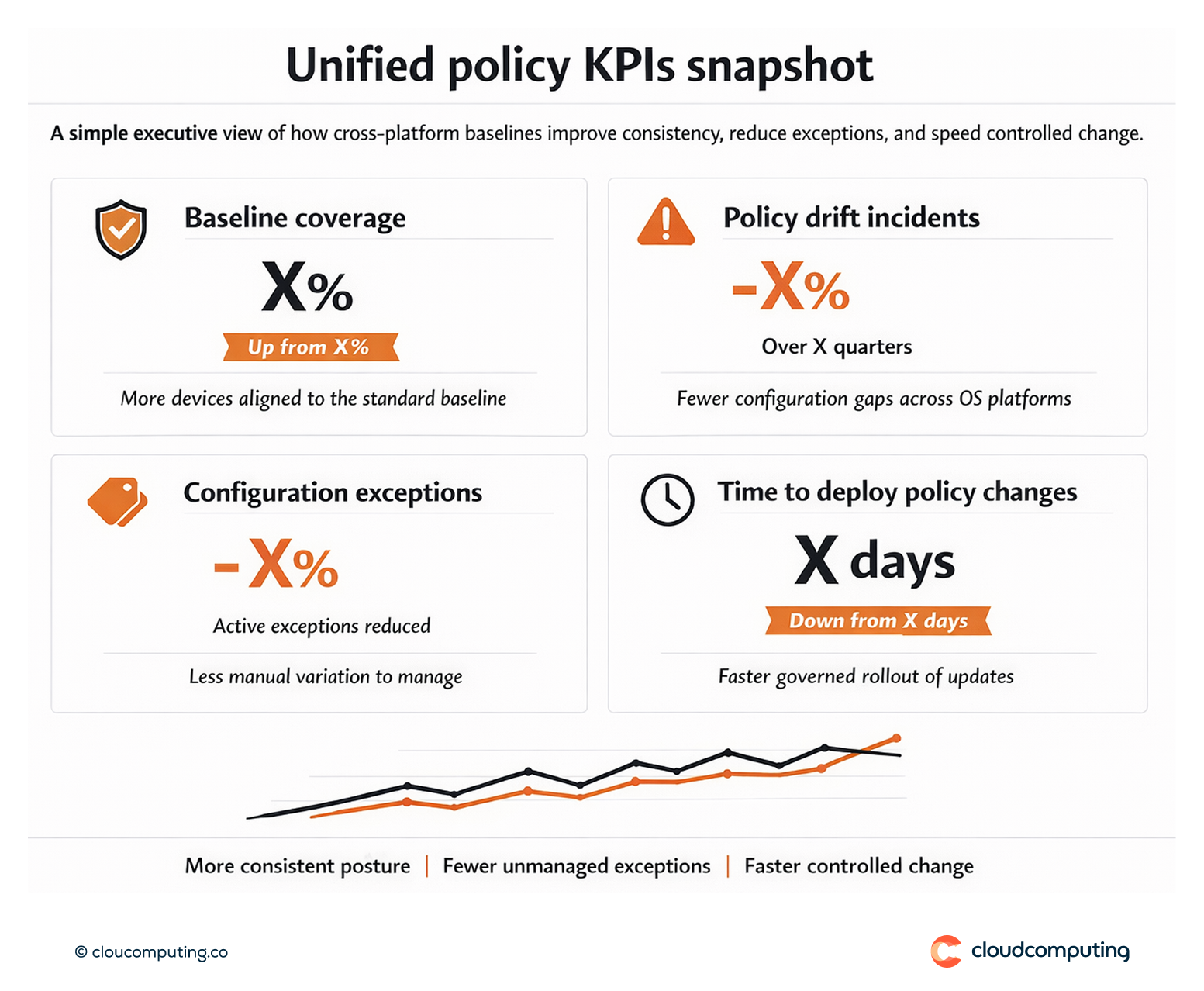
- Simpler operations with reusable profiles and controlled change processes
- Clearer compliance narratives through standardised controls
Quick Answers
Why unify policy across OS?
It reduces posture gaps and lowers operational complexity by enforcing consistent controls.
Does every OS support the same controls?
Not fully; the goal is a shared baseline with controlled, documented differences where platforms diverge.
How do you keep baselines maintainable?
Through reusable profiles, versioning, and governed change control.