The Problem
APIs are treated as projects, not products.
Ownership is unclear, consumer onboarding is inconsistent, and success metrics are missing. Adoption stalls, reuse remains low, and leadership cannot see ROI.
Without product thinking, APIs do not scale across the organisation.
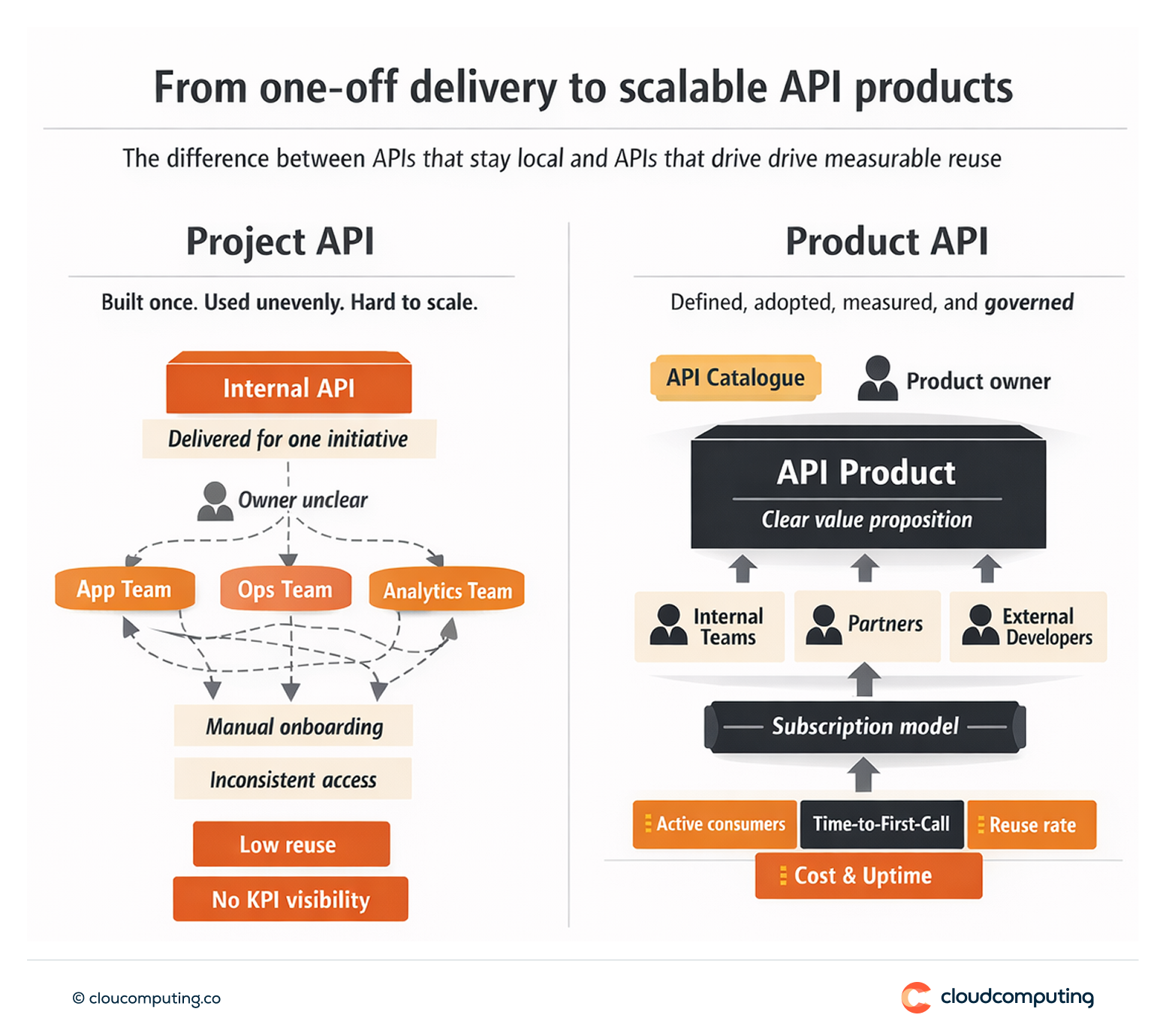
How we solve it: Define API products, consumer segments, usage KPIs, and controlled exposure with subscription patterns.
We establish API products with clear value propositions, onboarding journeys, and measurable adoption outcomes.
- API product definition
Group APIs into products aligned to business capabilities and consumer needs. - Consumer segmentation and access models
Define segments (internal teams, partners, external developers) and apply subscription and policy patterns. - KPIs and operating model
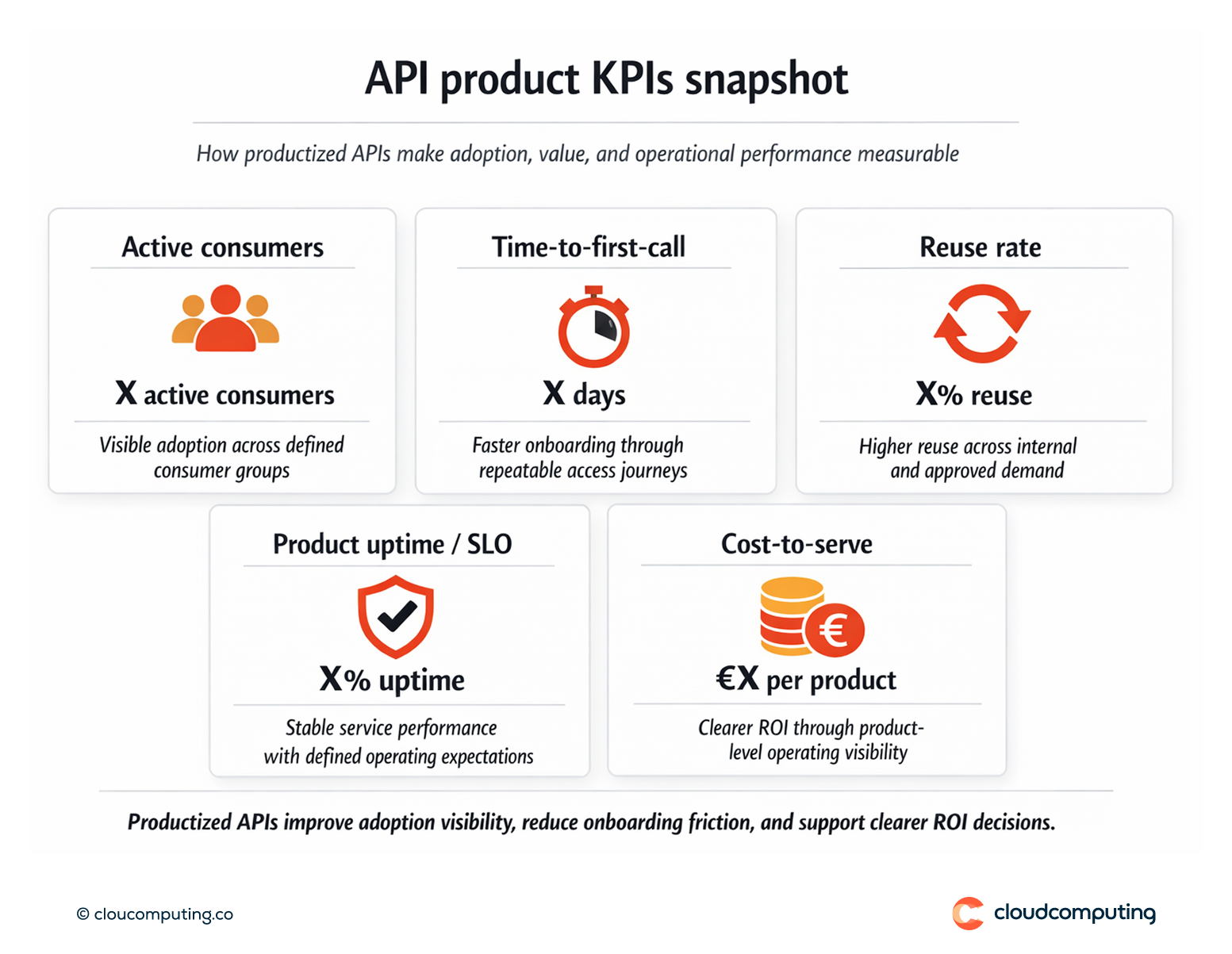
Track adoption, reuse, reliability, and consumer satisfaction metrics and align ownership accordingly.
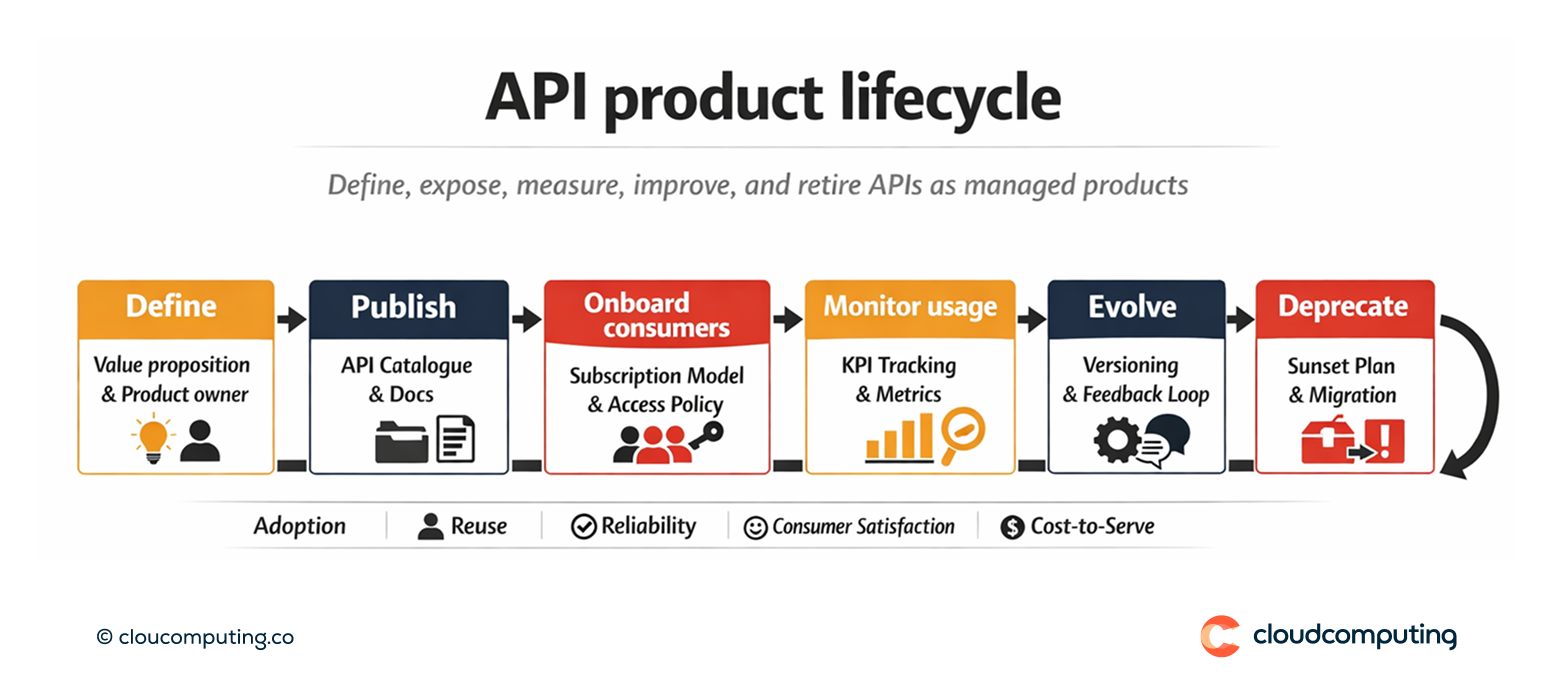
Expected outcome
- Measurable adoption through clear products and onboarding journeys
- Clearer ROI via usage KPIs and consumer value metrics
- Scalable API programmes with standard subscription and exposure patterns
- Improved organisational alignment on ownership and priorities
Quick Answers
What is API productization?
Treating APIs as managed products with ownership, consumer segments, onboarding, and measurable KPIs.
Why do internal APIs fail to scale?
Because they lack product ownership, adoption journeys, and a measurable value model.
What changes when APIs become products?
Access becomes controlled and repeatable, adoption becomes measurable, and evolution becomes governed.