The Problem
Breaking changes happen without coordination.
APIs evolve inconsistently, versioning is ad hoc, and deprecation is poorly communicated.
Consumers are surprised, incidents occur, and developer trust erodes.
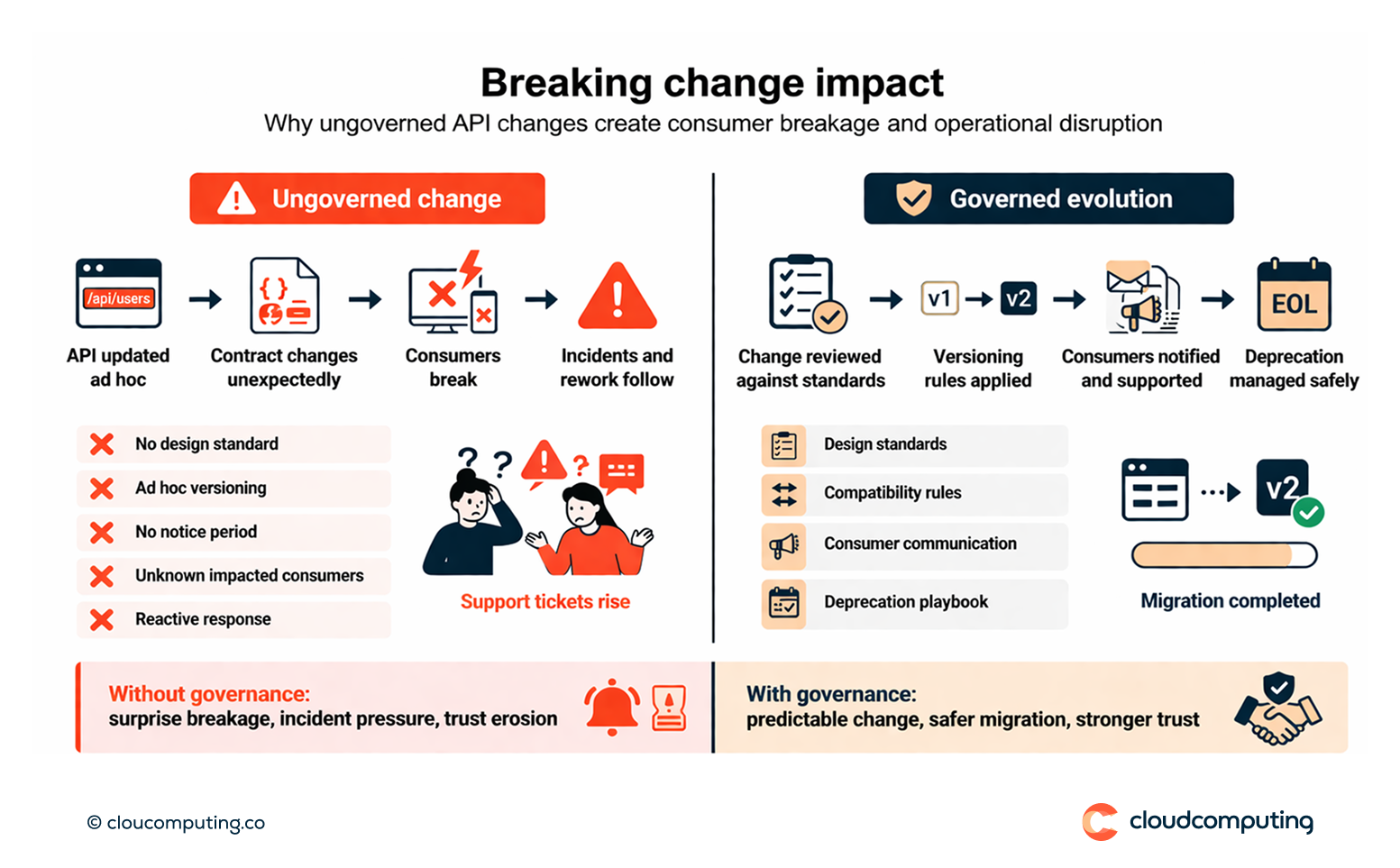
How we solve it: Implement API lifecycle governance with design standards, versioning rules, and deprecation playbooks.
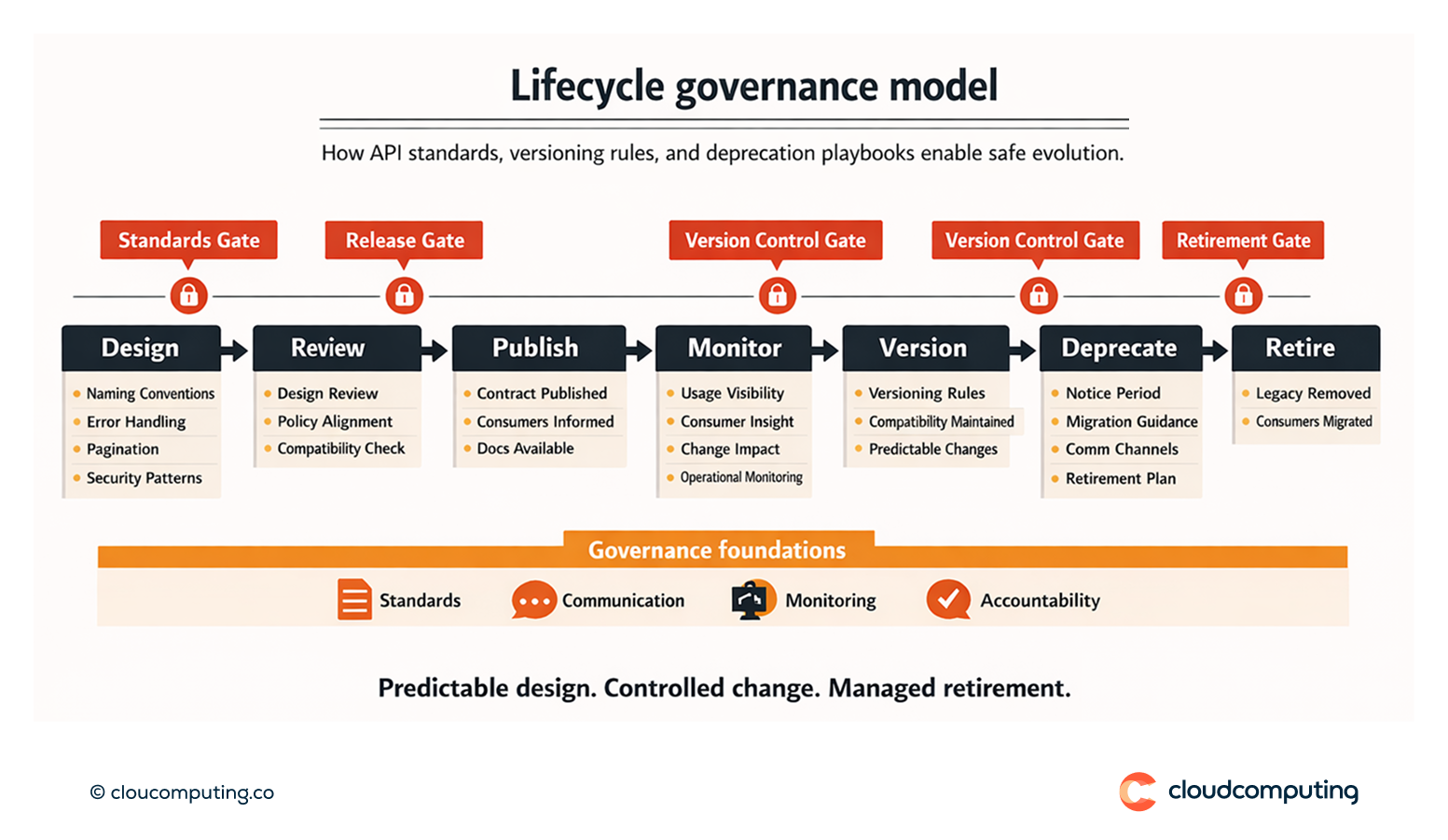
We establish governance that enables safe evolution: consistent design, predictable versions, and managed retirement.
- Design standards
Define conventions for naming, error handling, pagination, and security patterns. - Versioning rules
Establish when and how versions change, and how compatibility is maintained. - Deprecation playbooks
Define notice periods, communication channels, and retirement procedures.
Expected outcome
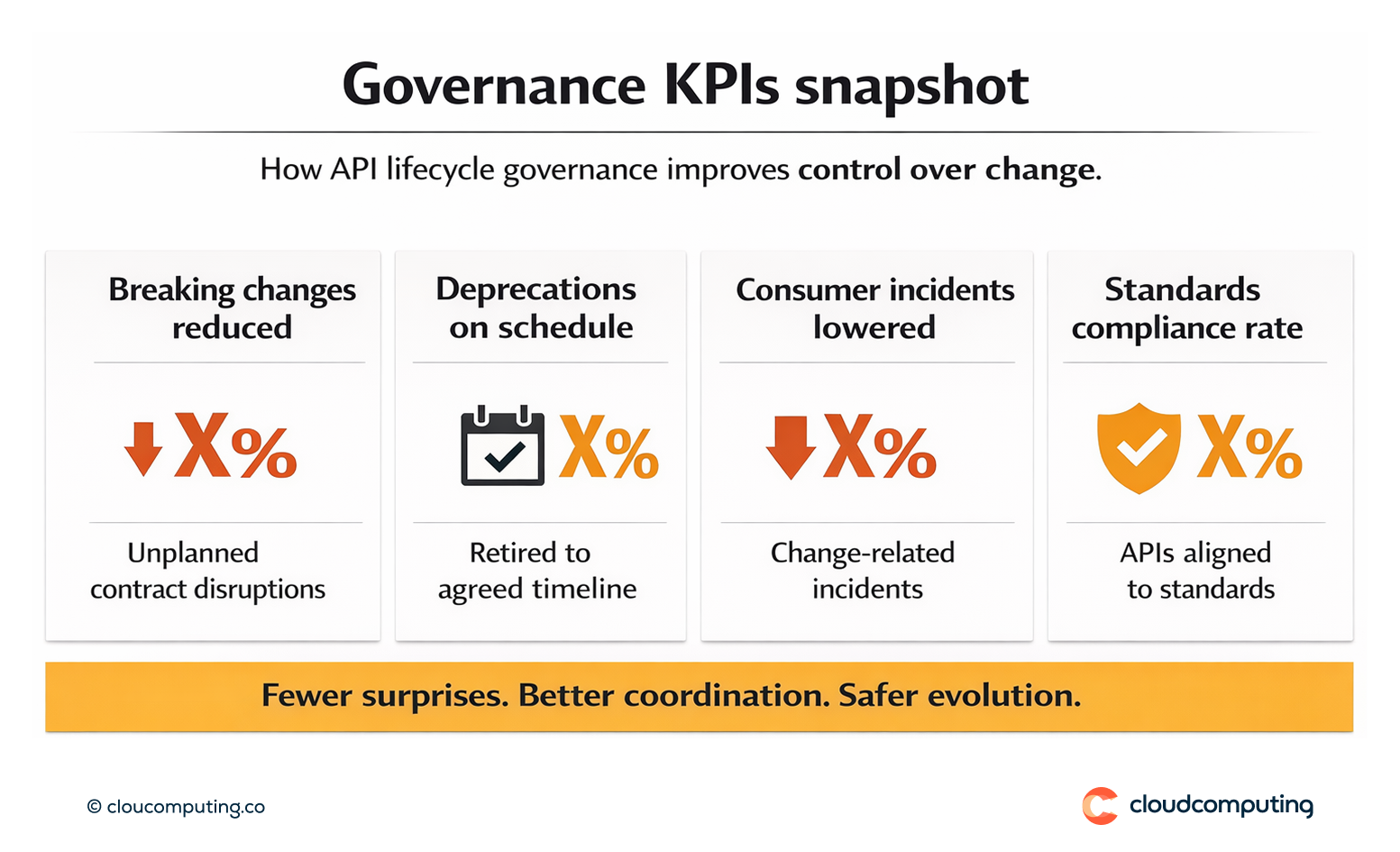
- Fewer breaking incidents through predictable versioning and change control
- Better developer trust via stable contracts and clear communication
- Smoother evolution with managed deprecation and retirement
- Improved organisational alignment on API standards
Quick Answers
What is API lifecycle governance?
Rules and processes that standardise design, manage versions, and control deprecation and retirement.
Why do breaking changes happen?
Because consumers are unknown, standards are inconsistent, and change is not governed.
What is a deprecation playbook?
A defined process for notifying consumers, supporting migration, and retiring old versions safely.