The Problem
App sprawl, inconsistent versions, and manual deployment slow teams down.
Users wait for access to tools, compatibility issues increase support load, and security teams struggle to ensure critical apps are updated consistently.
Uncontrolled updates can also create operational instability.
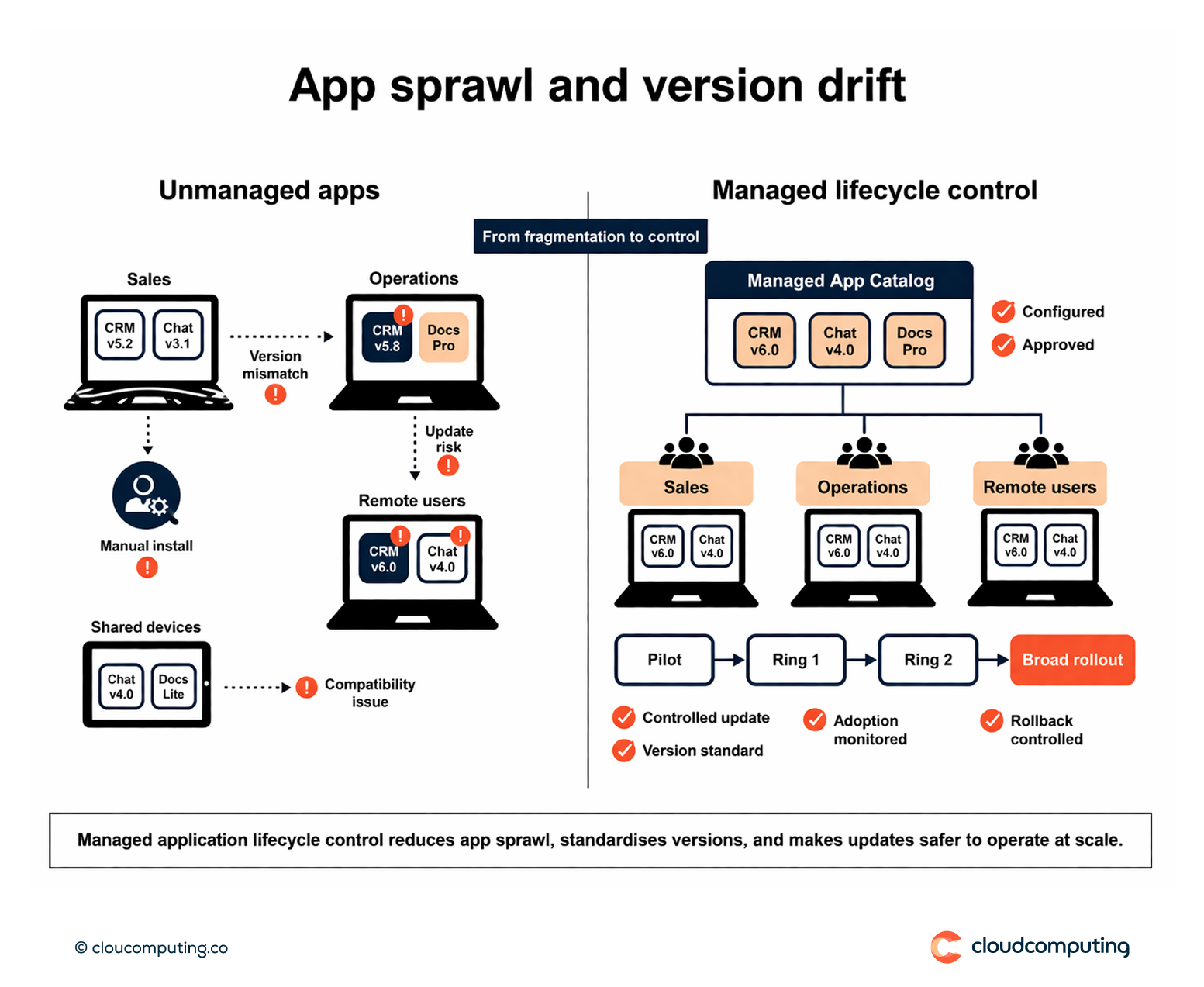
How we solve it: Use a managed app catalog with configuration, staged rollouts, and controlled updates to standardise app delivery.
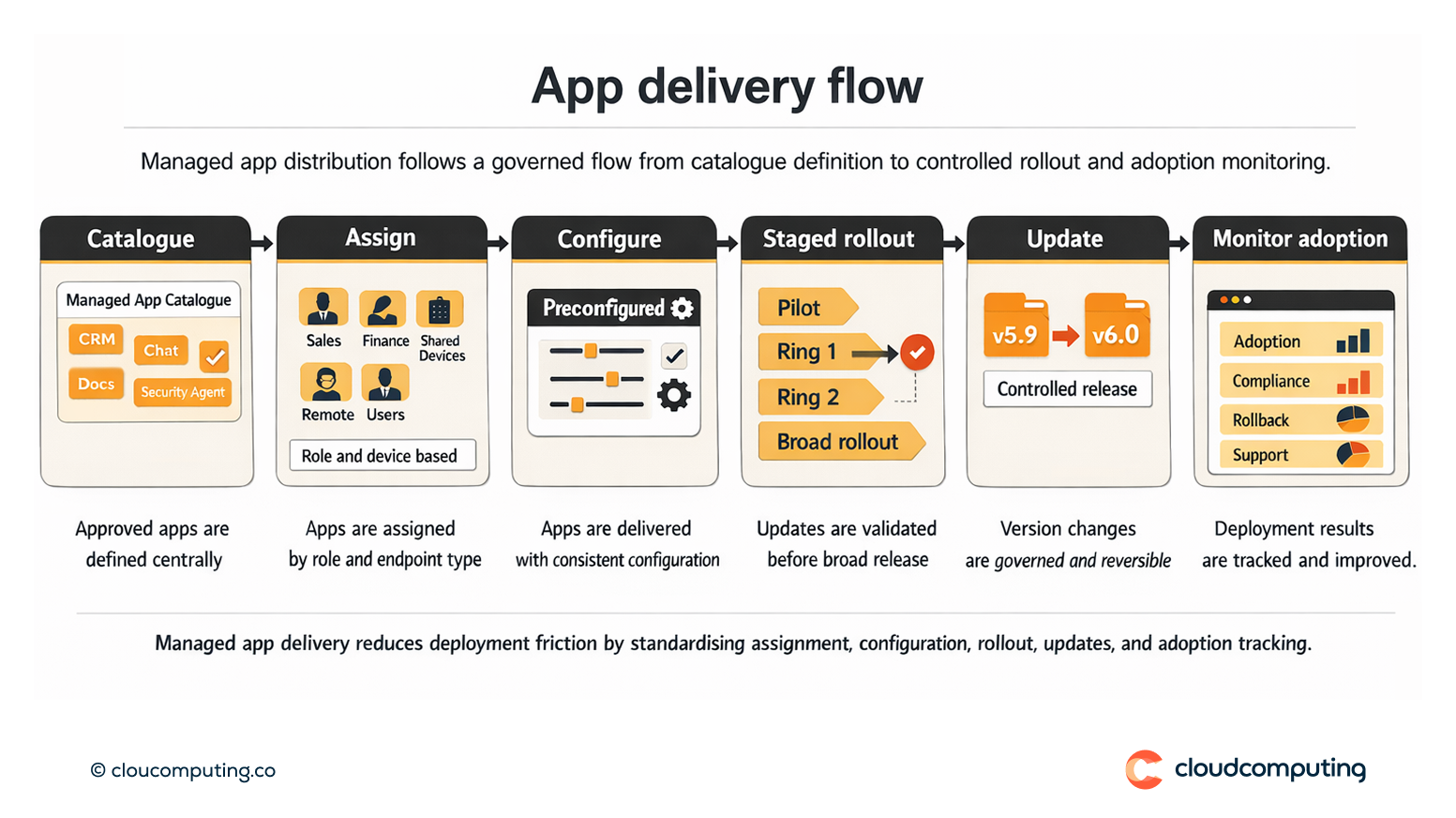
We implement application lifecycle management so apps are distributed, configured, and updated predictably across platforms.
- Managed app catalog
We standardise app availability and deployment rules based on role and device type. - App configuration management
We apply consistent settings to managed apps to reduce misconfiguration and support demand. - Staged rollout and update governance
We use rings and phased deployments to reduce disruption while maintaining security posture.
Expected outcome
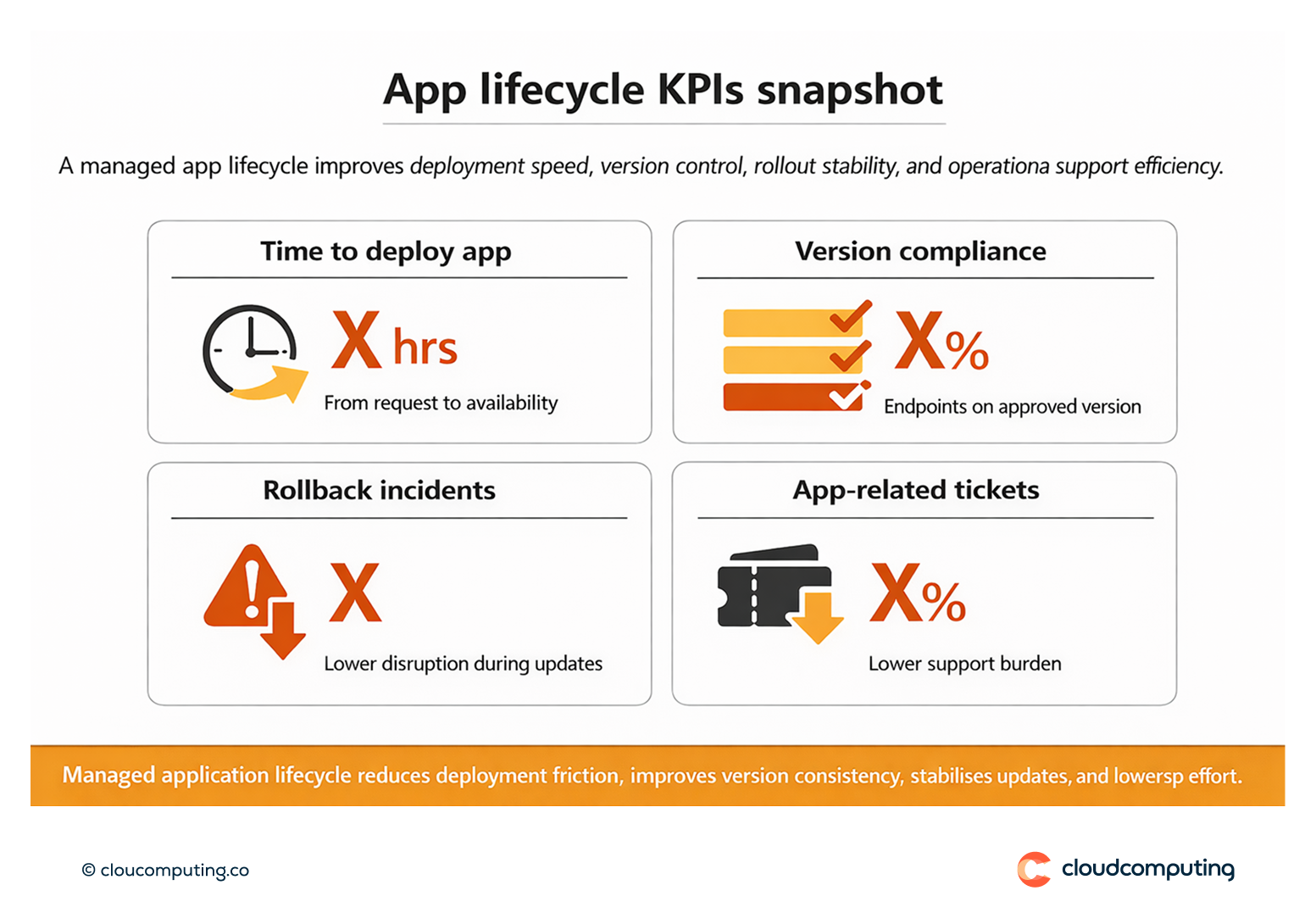
- Faster app delivery through standardised, role-based distribution
- Fewer compatibility issues via controlled updates and staged rollouts
- Lower support burden by reducing manual installs and inconsistent configuration
- Improved security posture through predictable application update governance
Quick Answers
What is application lifecycle management in UEM?
Controlled distribution, configuration, and update governance for applications across managed devices.
Why do staged rollouts matter?
They reduce disruption by validating updates in rings before broad deployment.
How does this reduce support load?
By eliminating manual installs and preventing version drift and configuration inconsistency.