The Problem
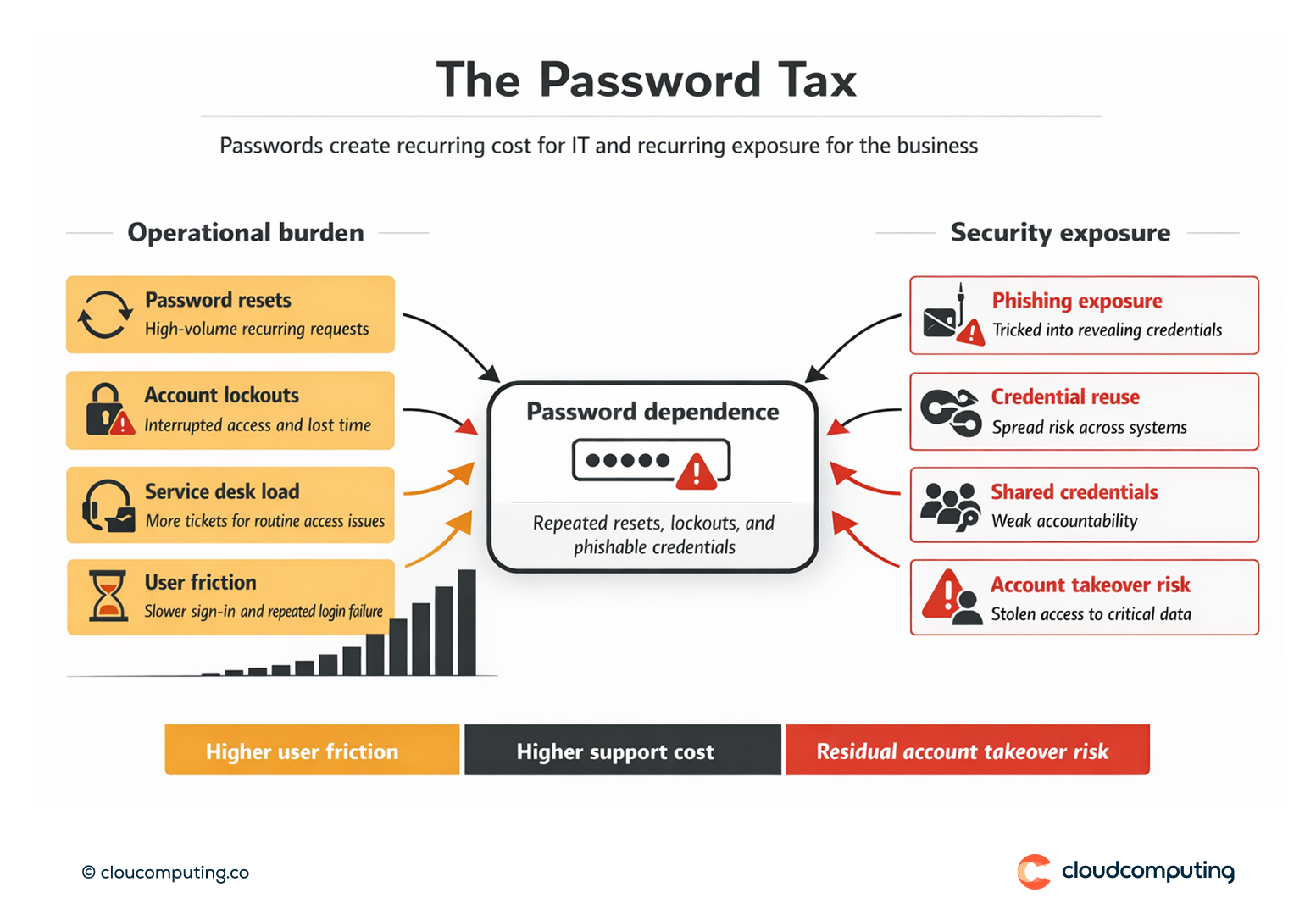
Passwords remain a high-volume operational burden and a persistent security weakness. They are phished, reused, shared, and reset repeatedly.
For many organisations, password resets and account lockouts are among the largest drivers of service desk tickets, while credential-based attacks continue to target users with access to critical systems and data.
The result is a poor trade-off: high user friction, high support costs, and residual account takeover risk.
How we solve it: Roll out passwordless sign-in for selected user groups and managed devices to reduce credential risk and support load.
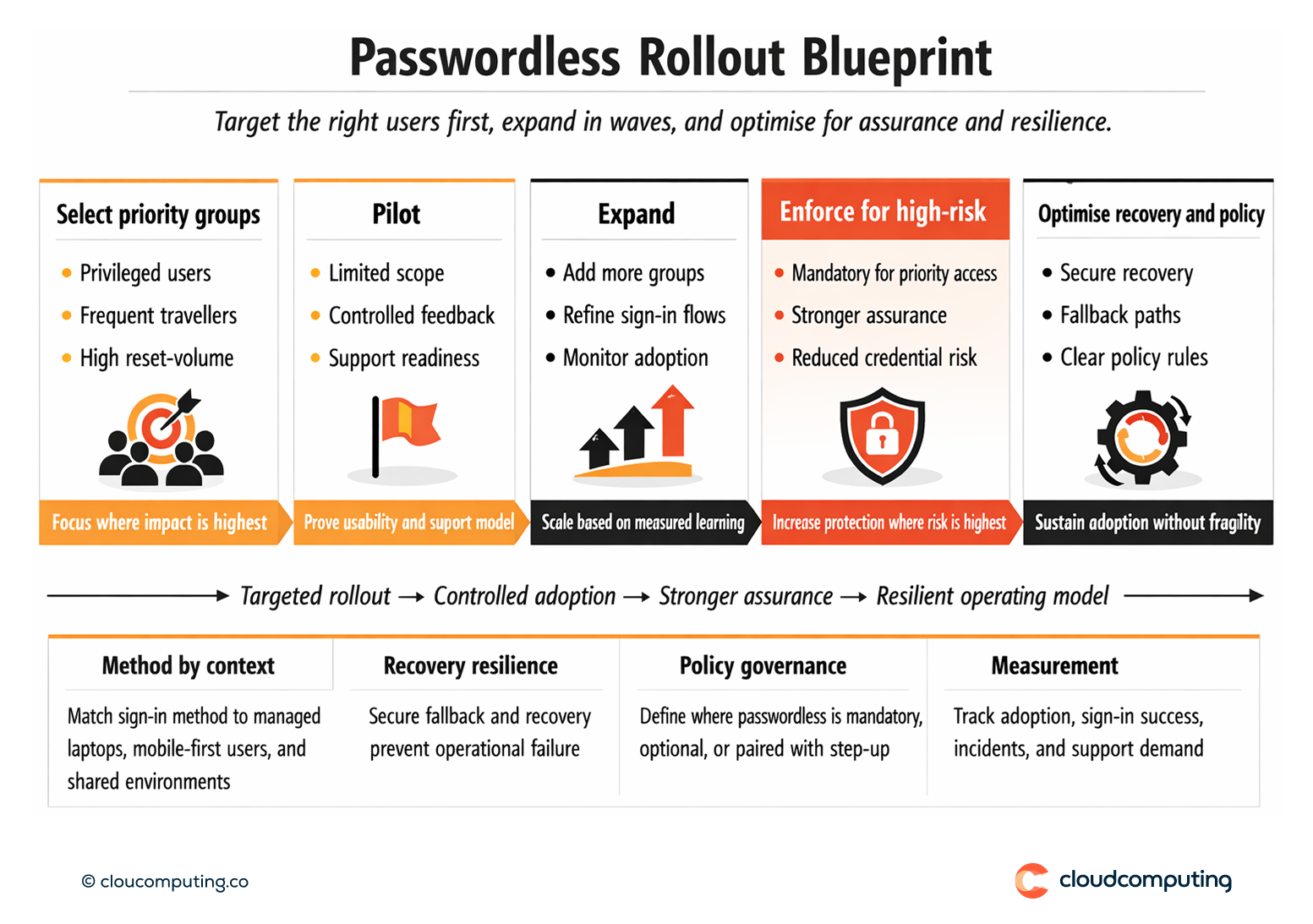
We implement passwordless authentication as a targeted programme, starting with the populations and devices where it delivers the largest security and operational benefits.
- Select priority populations and use cases
We identify where passwordless delivers immediate value: privileged users, high-risk business functions, frequent travellers, frontline staff, and groups with high reset volume. - Choose the right passwordless methods by context
We align passwordless flows to device realities and user needs (managed laptops, mobile-first users, shared workstations), ensuring sign-in remains reliable and usable. - Phased rollout with measurable outcomes
We start with a controlled pilot, expand in waves, and use adoption and incident metrics to refine policy and support processes. - Strong recovery and fallback design
We implement secure account recovery and fallback paths so passwordless does not become operationally fragile when devices change or users are locked out. - Policy governance and assurance
We define where passwordless is mandatory, where it is optional, and which actions still require step-up authentication for higher assurance.
Expected outcome
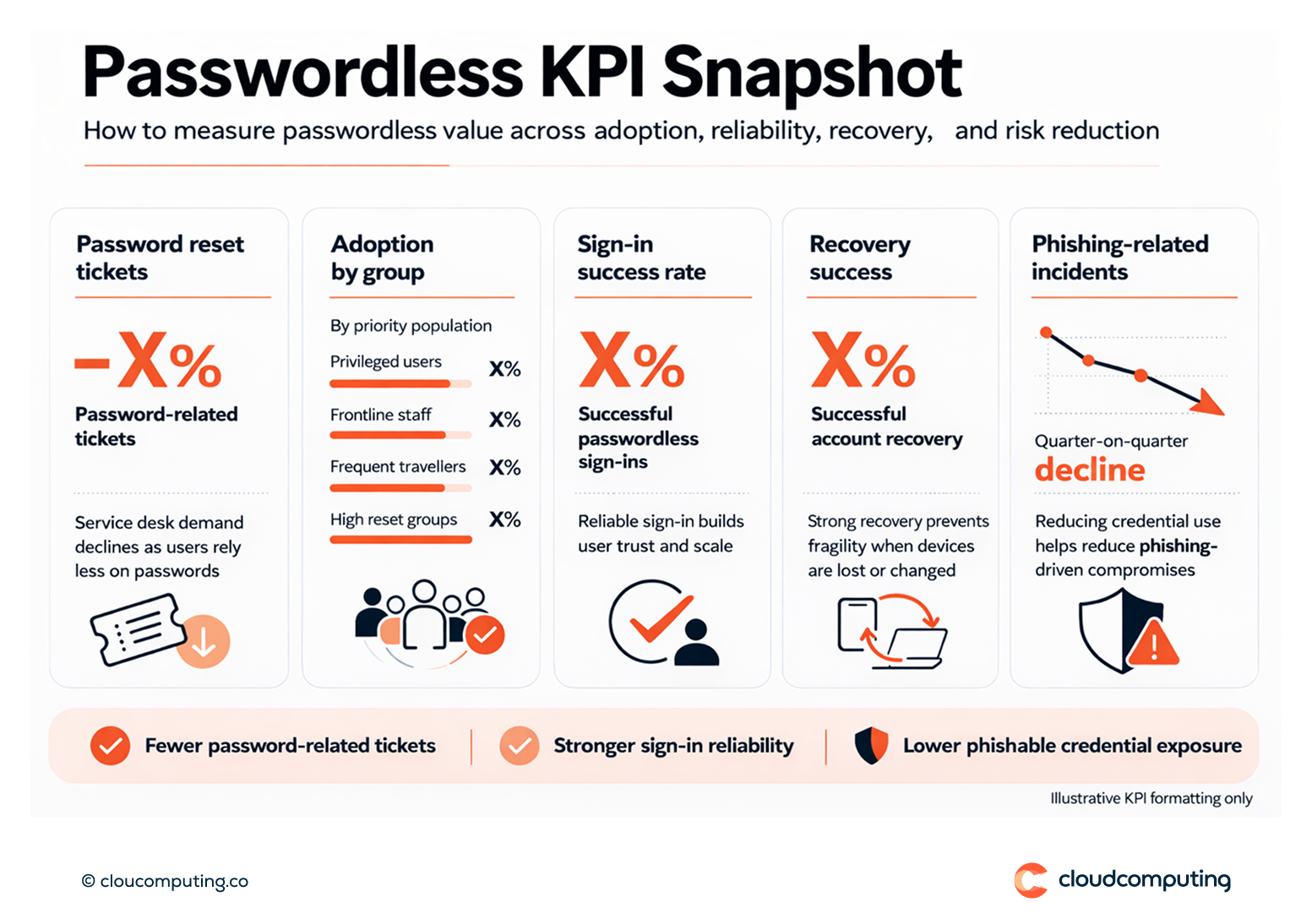
- Stronger security by reducing reliance on phishable credentials
- Fewer lockouts and resets through modern sign-in flows and resilient recovery
- Better user experience with faster, more consistent sign-in
- Lower service desk load as password-related tickets decline over time
Quick Answers
What is passwordless sign-in?
Authentication that does not rely on a user typing a password, using stronger sign-in methods tied to devices or user presence.
Why prioritise specific user groups first?
Because passwordless delivers the strongest ROI where password resets are frequent or access risk is high, while reducing rollout friction.
Does passwordless remove the need for MFA?
Passwordless can increase assurance for sign-in, but sensitive actions may still require step-up authentication based on risk and policy.