The Problem
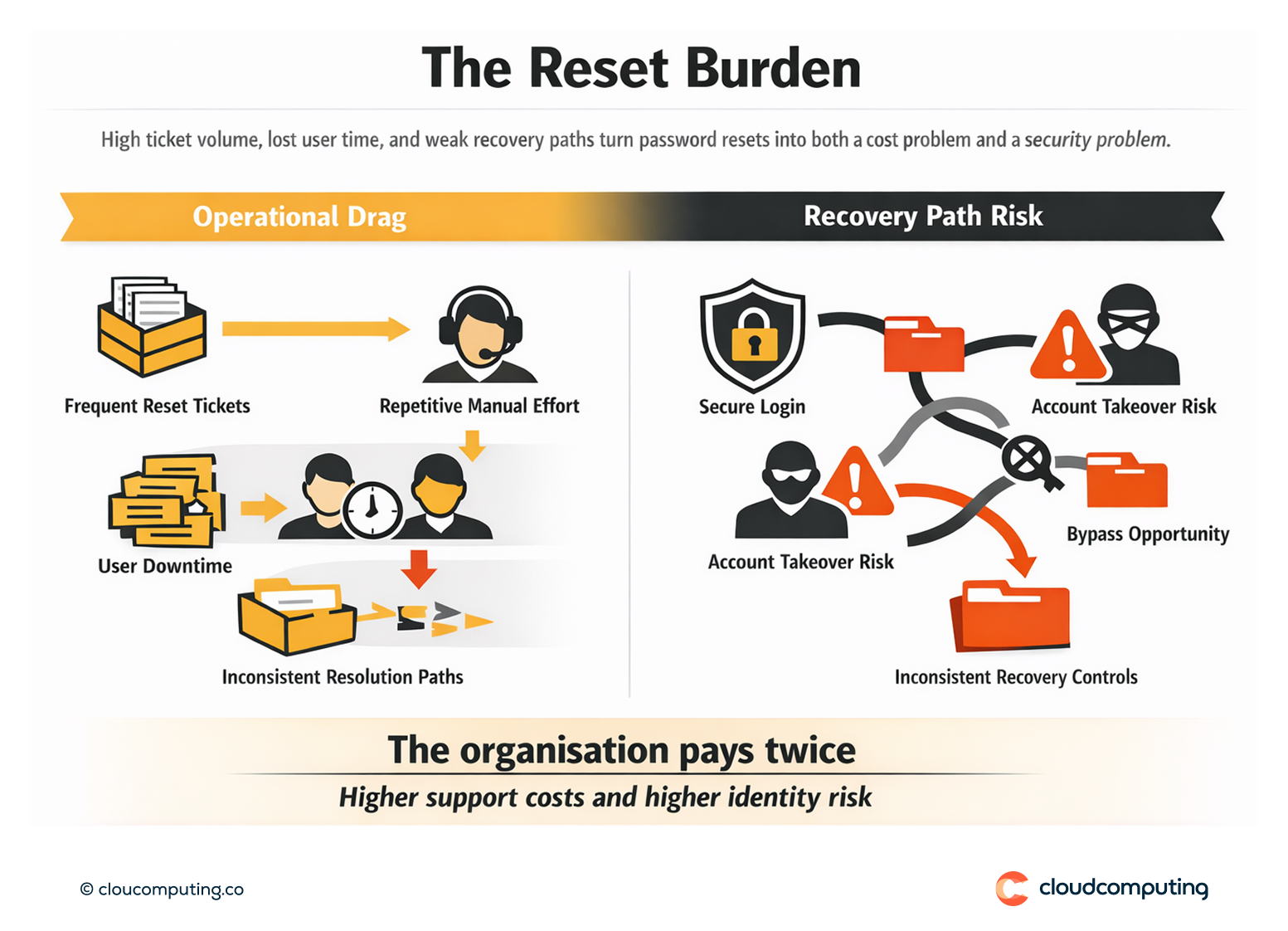
Password resets and account lockouts are a high-frequency operational drain. Users lose time, service desks absorb repetitive tickets, and recovery processes vary across applications and directories.
At the same time, weak recovery controls create security exposure: attackers often target recovery paths because they can be easier to bypass than primary authentication.
The organisation ends up paying twice – higher support costs and higher identity risk.
How we solve it: Enable self-service recovery with strong verification and policy controls to reduce tickets without weakening security.
We implement self-service password reset and account recovery as a governed capability, balancing usability with assurance so recovery becomes reliable and defensible.
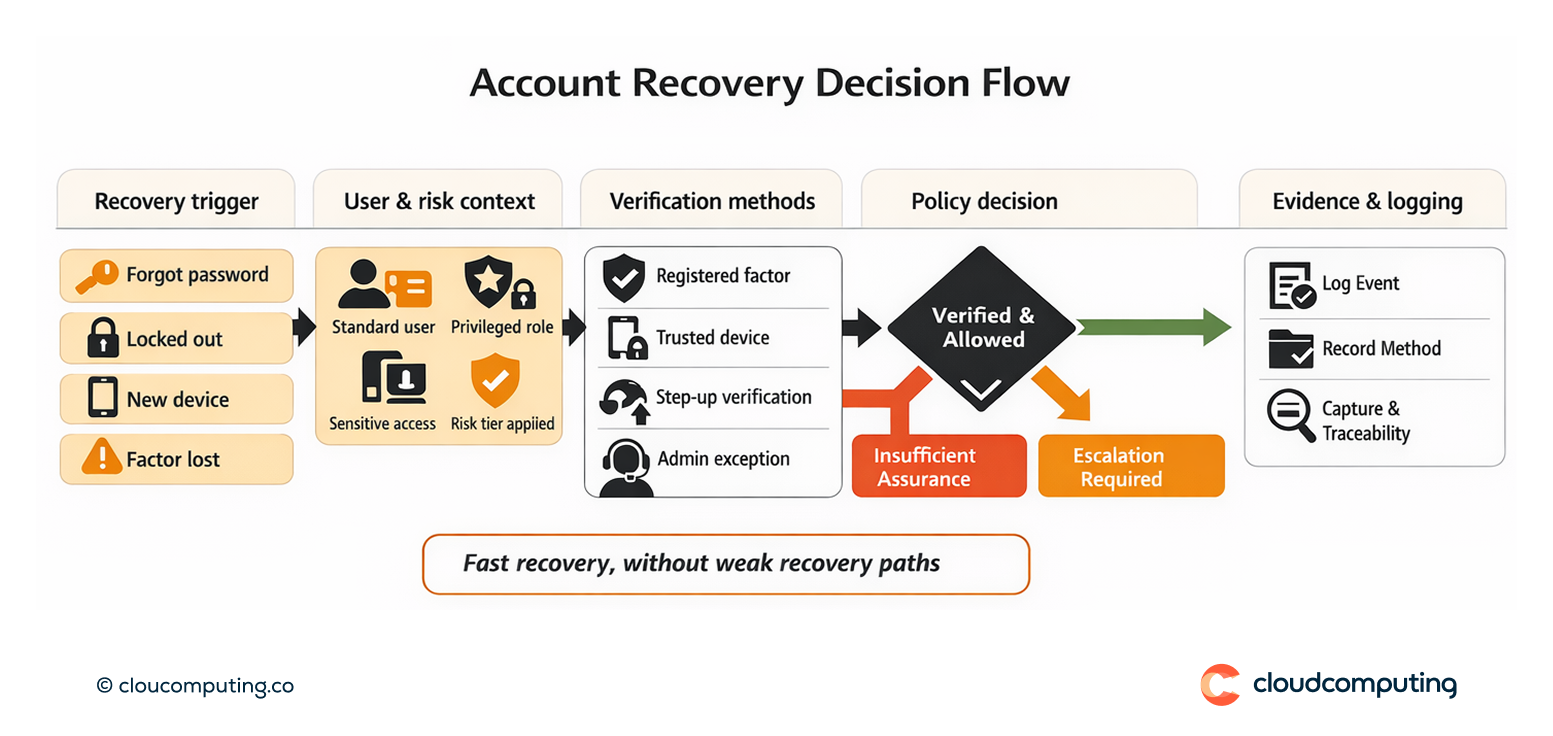
- Define recovery scenarios and policy
We map common scenarios (forgotten password, lockout, device change, MFA factor loss) and define which recovery methods are allowed for each risk tier and user group. - Strong verification for recovery
We enforce higher assurance during recovery than “knowledge-based” approaches, aligning verification strength to the sensitivity of the account and the action being performed. - Consistent experience across sign-in paths
We centralise recovery flows so users have a predictable experience, reducing reliance on app-specific reset mechanisms and support workarounds. - Controlled exceptions and admin recovery
We define break-glass and admin-assisted recovery paths with clear approvals, time bounds, and traceability—so urgent access does not create informal bypasses. - Operational rollout and adoption
We implement user communications, guidance, and support patterns that reduce initial friction and drive sustained adoption.
Expected outcome
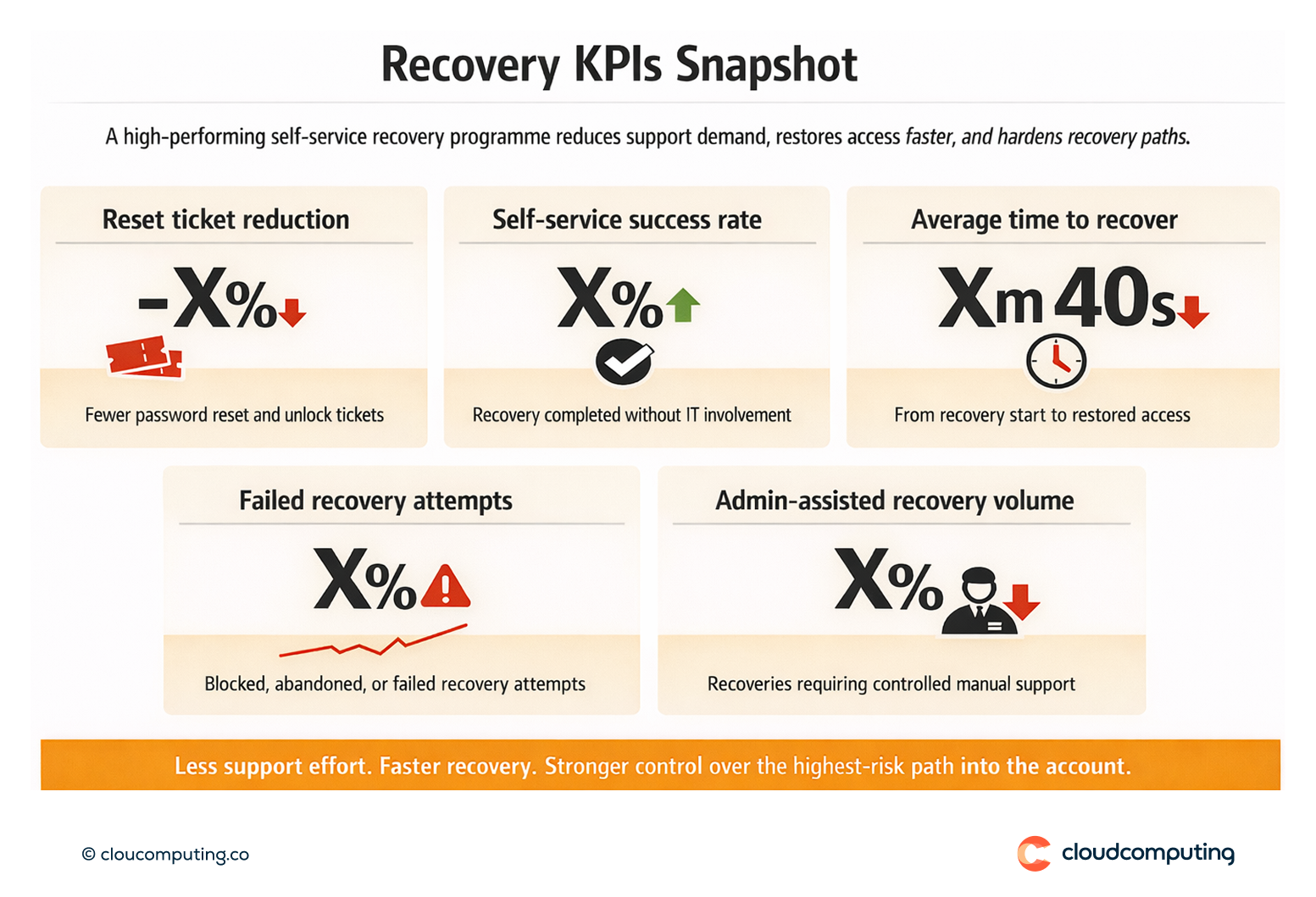
- Fewer tickets as users complete resets and unlocks independently
- Lower cost through reduced service desk workload and shorter resolution times
- Happier users with faster recovery and less downtime
- Stronger security by hardening recovery paths and reducing exploitable bypass routes
Quick Answers
What is self-service password reset (SSPR)?
A controlled mechanism that lets users reset passwords and recover accounts without contacting IT, using approved verification steps and policy.
Why is account recovery a security risk?
Attackers often target recovery paths because they can be weaker than primary authentication if verification is not strong and consistent.
How do you reduce tickets without lowering assurance?
By combining self-service recovery with strong verification, risk-tiered policies, and traceable