The Problem
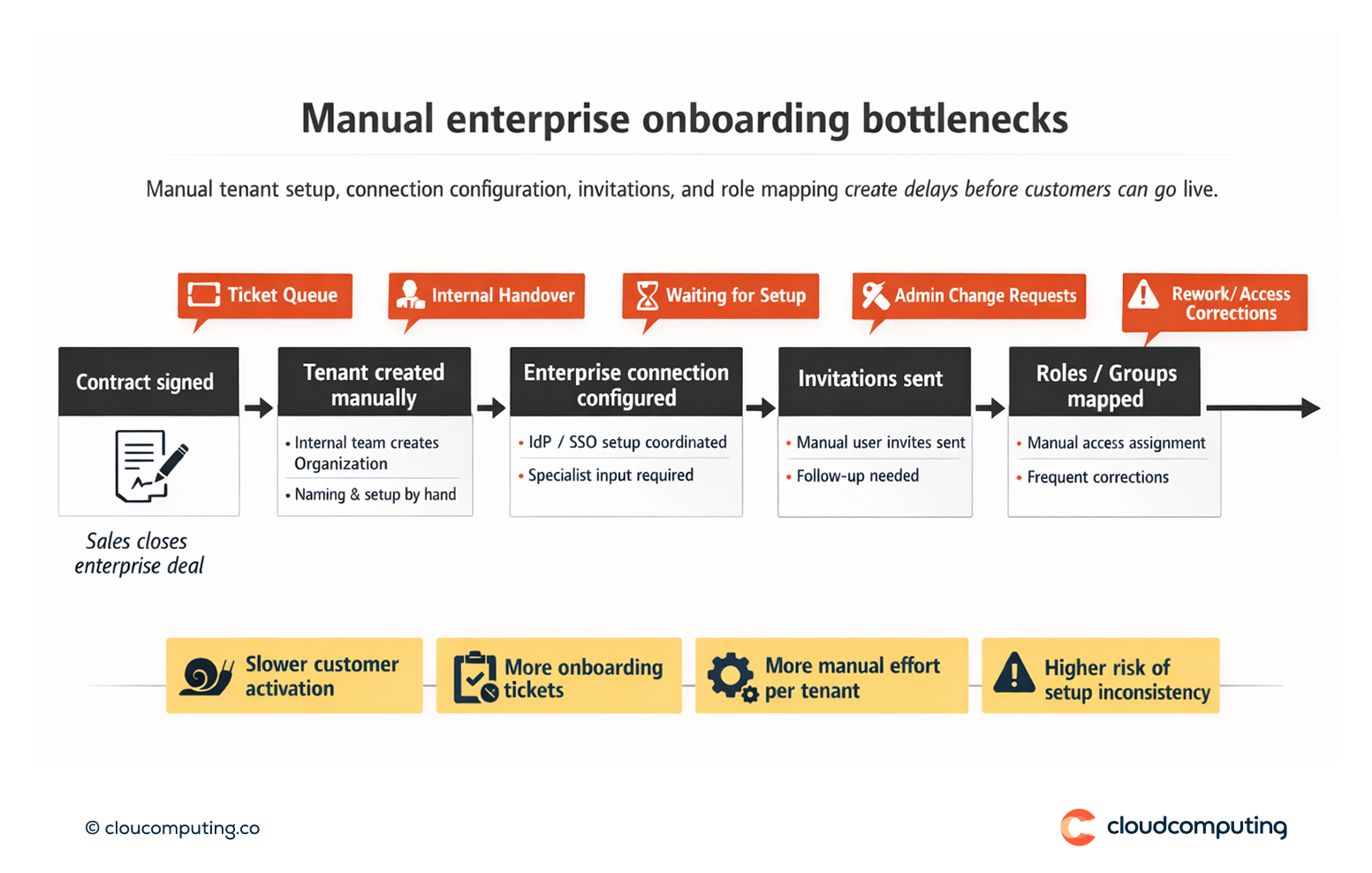
Enterprise customer onboarding is frequently slow and manual.
Sales and solution teams coordinate tenant creation, connection setup, invitations, and initial role assignment through tickets and handovers.
Identity becomes a bottleneck: customers wait for access, admins request repeated changes, and the product struggles to scale onboarding without adding operational headcount.
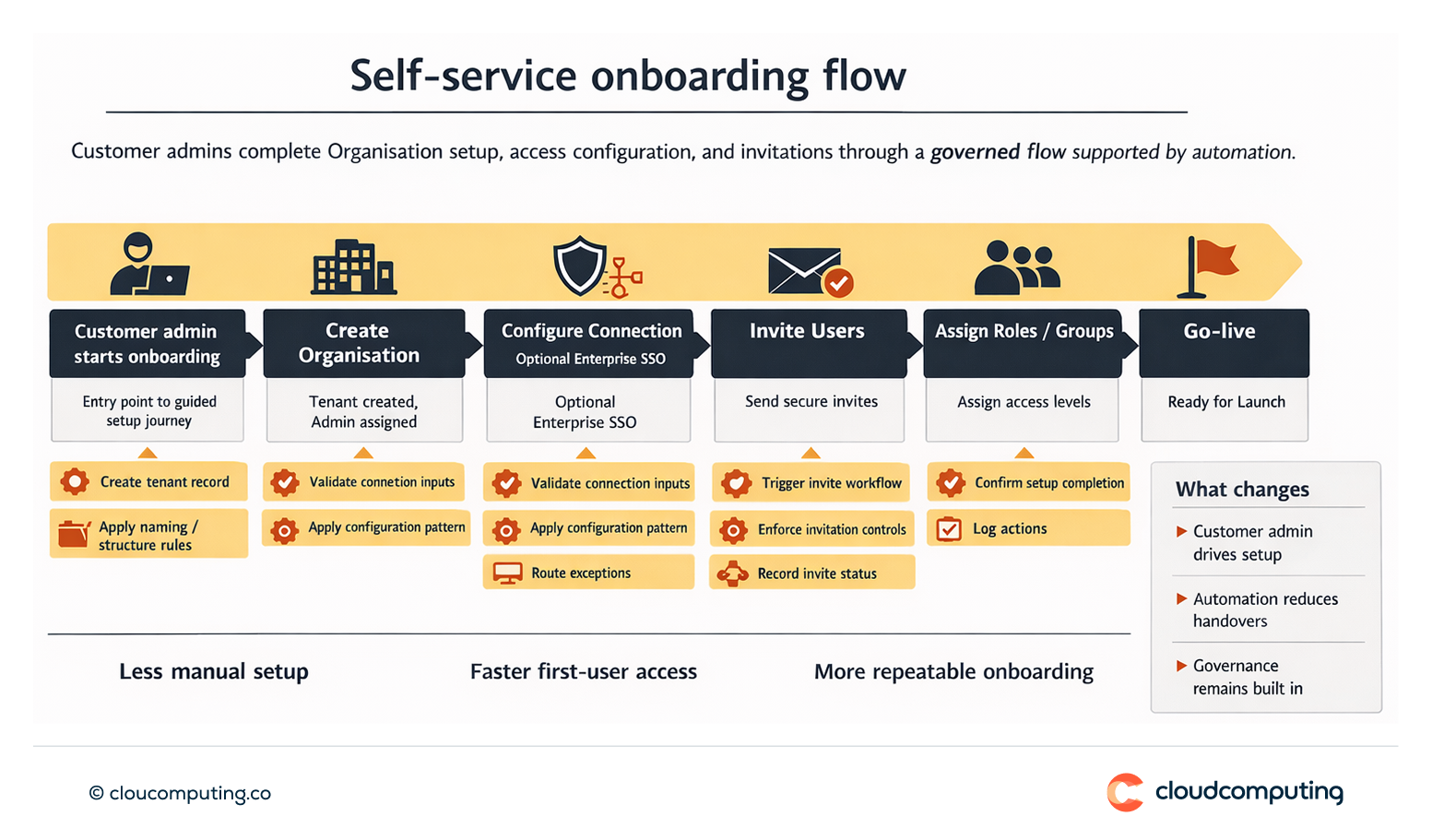
How we solve it: Build self-service onboarding workflows and automate customer setup patterns from first invite to ongoing lifecycle.
We design customer-facing onboarding flows and backend automation that creates tenants, configures access, and supports lifecycle changes with minimal manual intervention.
- Self-service tenant setup
We build workflows for Organisation creation, admin assignment, and initial configuration aligned to your product onboarding journey. - Invite and membership flows
We implement secure invitations, membership management, and role assignment patterns that scale across customer tenants. - Group and access provisioning patterns
We standardise how customer groups map to roles/permissions, enabling repeatable setup and reduced misconfiguration. - Lifecycle automation
We automate common lifecycle operations: admin changes, user deactivation, connection updates, and policy changes with governance and traceability.
Expected outcome
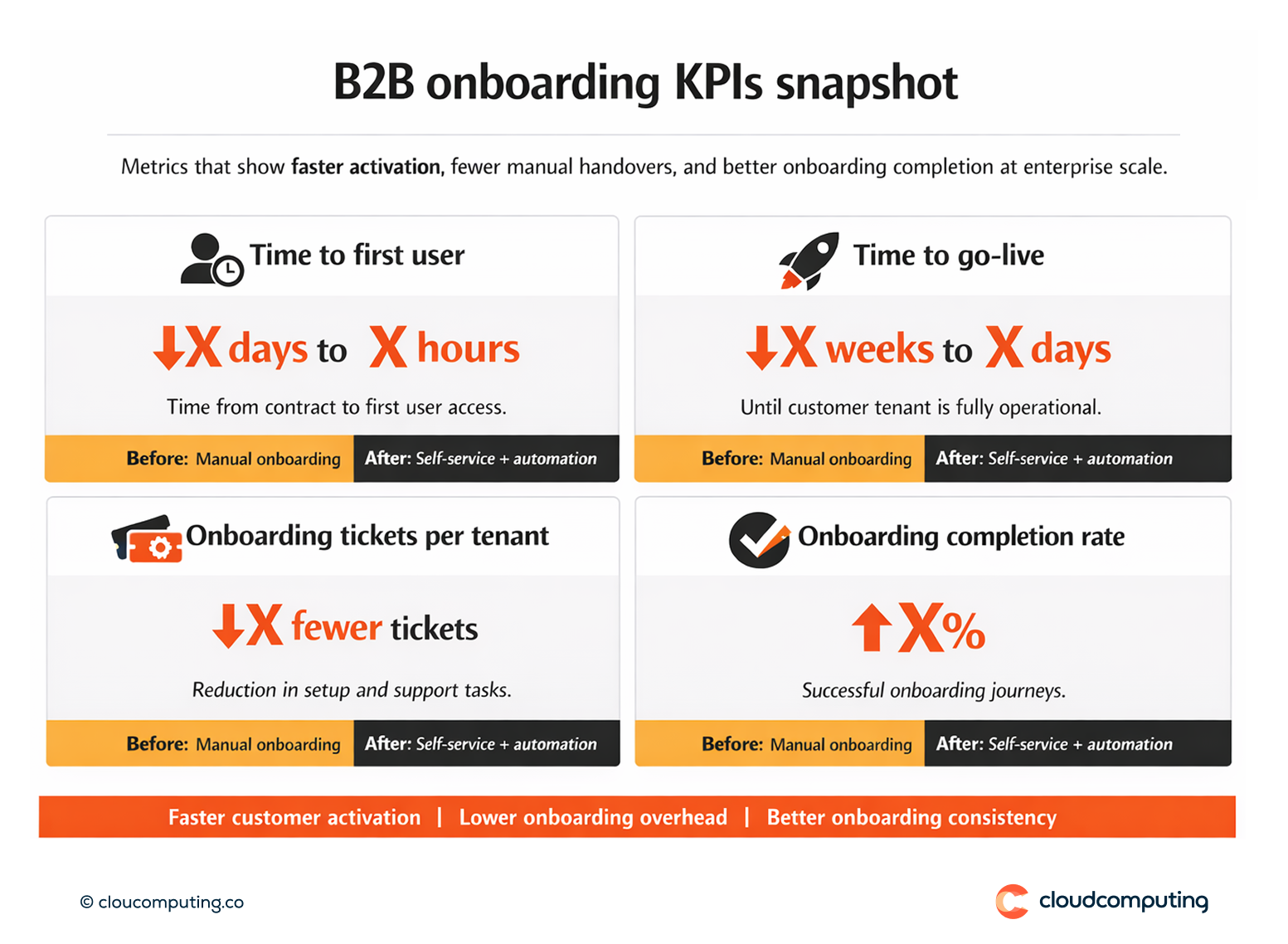
- Increased sales velocity by reducing onboarding lead time for enterprise customers
- Smoother onboarding at scale with fewer manual handovers and fewer errors
- Lower operational overhead through standardised patterns and automation
- Better customer experience with faster time-to-value after contract signature
Quick Answers
What is self-service B2B onboarding in CIAM?
Customer-facing workflows that let tenants configure their Organisation, invite users, and manage roles without manual intervention from your teams.
Why does identity become a sales bottleneck?
Because enterprise customers require setup steps (tenants, federation, roles) that are often handled manually and do not scale.
What should be automated first?
Tenant creation, invitations, and role/group provisioning patterns that reduce repetitive work and misconfiguration.