The Problem
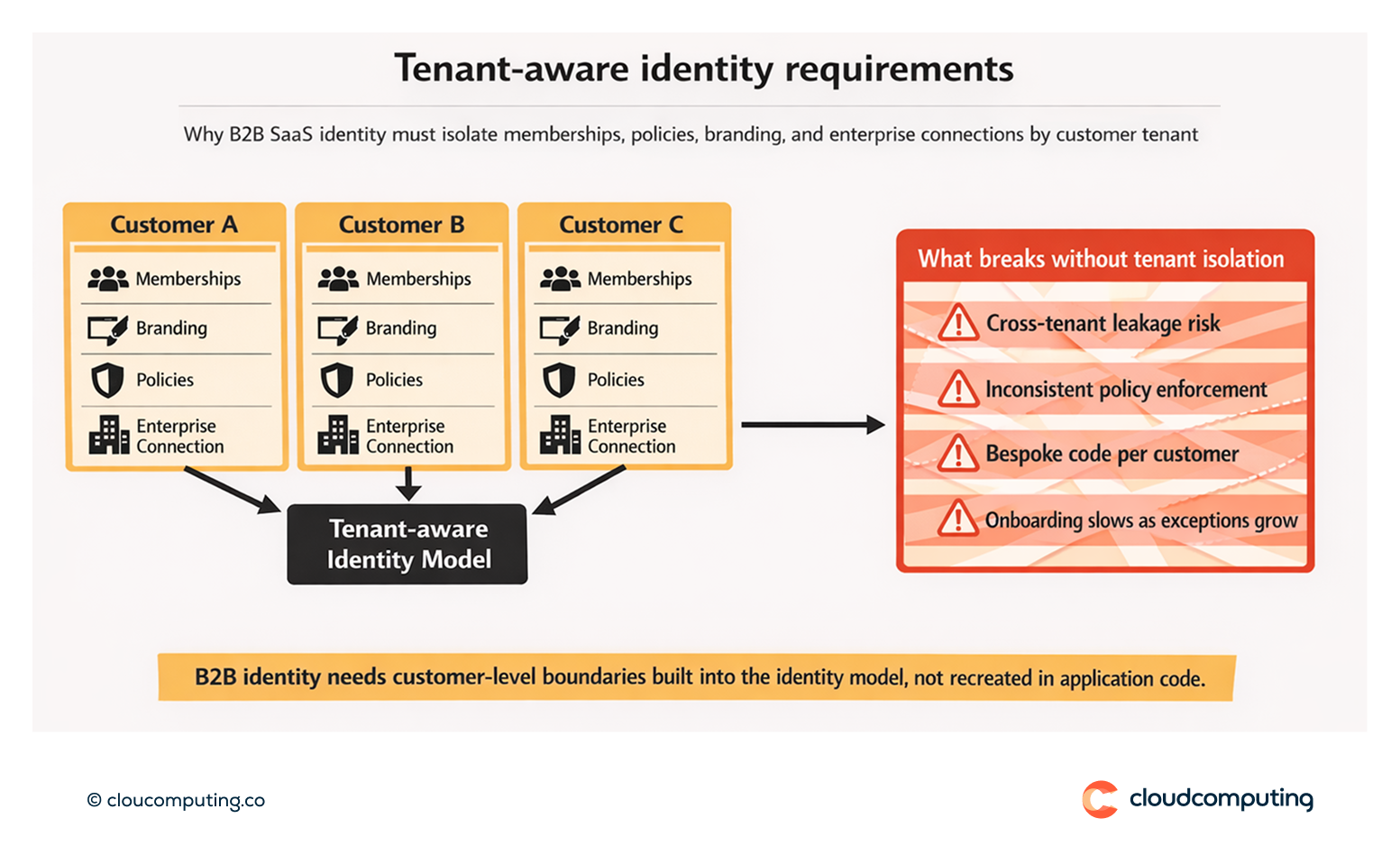
B2B SaaS identity is tenant-aware by nature: users belong to customers, customers require distinct policies, and enterprise connections must be isolated per tenant.
Without a tenant model, teams end up building memberships, branding, and access boundaries repeatedly in application code.
This increases risk (cross-tenant exposure), slows enterprise onboarding, and creates operational overhead when customers request SSO, custom policies, or lifecycle controls.
How we solve it: Implement Auth0 Organizations and design tenant-aware onboarding, policy, and access patterns.
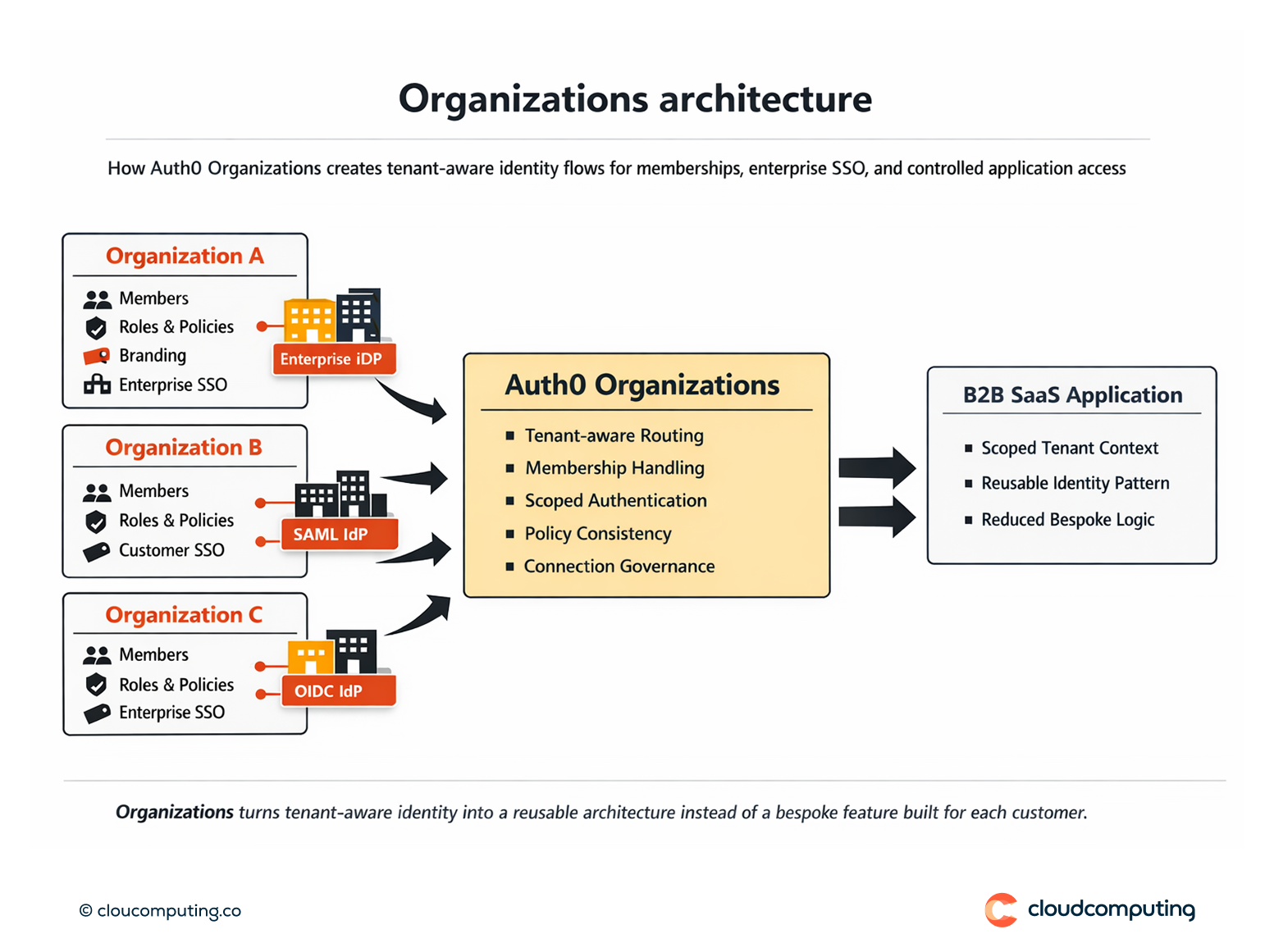
We establish a tenant-aware identity foundation using Organizations so customer boundaries, memberships, and enterprise connections are implemented consistently and safely.
- Tenant model and boundaries
We define the tenant model (Organization structure, membership rules, roles), including isolation expectations and cross-tenant access constraints. - Per-tenant authentication patterns
We enable tenant-aware routing, login experience variations where needed, and enterprise connections scoped to the correct Organization. - Policy and security consistency
We standardise how MFA/step-up, session controls, and recovery requirements apply per tenant, avoiding ad hoc enterprise exceptions. - Operational model for enterprise onboarding
We define how new tenants are created, how connections are managed, and how changes are governed so onboarding does not become a bespoke engineering task.
Expected outcome
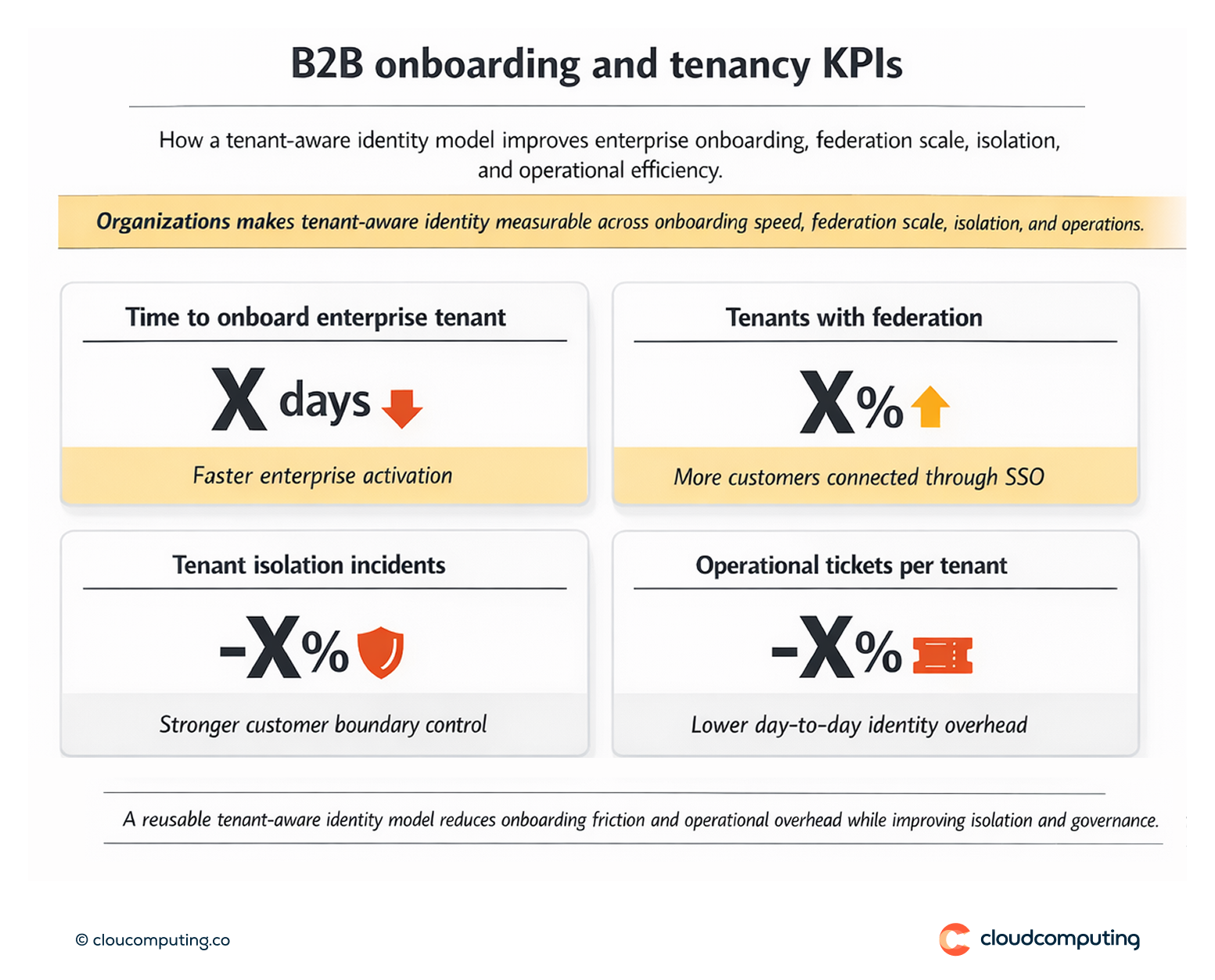
- Faster enterprise onboarding by reusing a standard tenant-aware identity model
- Clearer tenant boundaries that reduce cross-tenant risk and simplify governance
- Less operational overhead for managing enterprise connections, policies, and memberships
- More predictable delivery for product teams as identity patterns become reusable
Quick Answers
What is Auth0 Organizations?
A capability designed for B2B SaaS that models customers as tenants, with memberships, roles, and enterprise connections scoped per Organization.
Why is tenant-aware identity critical in B2B?
It prevents cross-tenant access risk and reduces the need to rebuild identity features in application code for each customer requirement.
What changes for enterprise onboarding?
Tenant creation, memberships, and federation become standardised patterns rather than bespoke engineering work.