The Problem
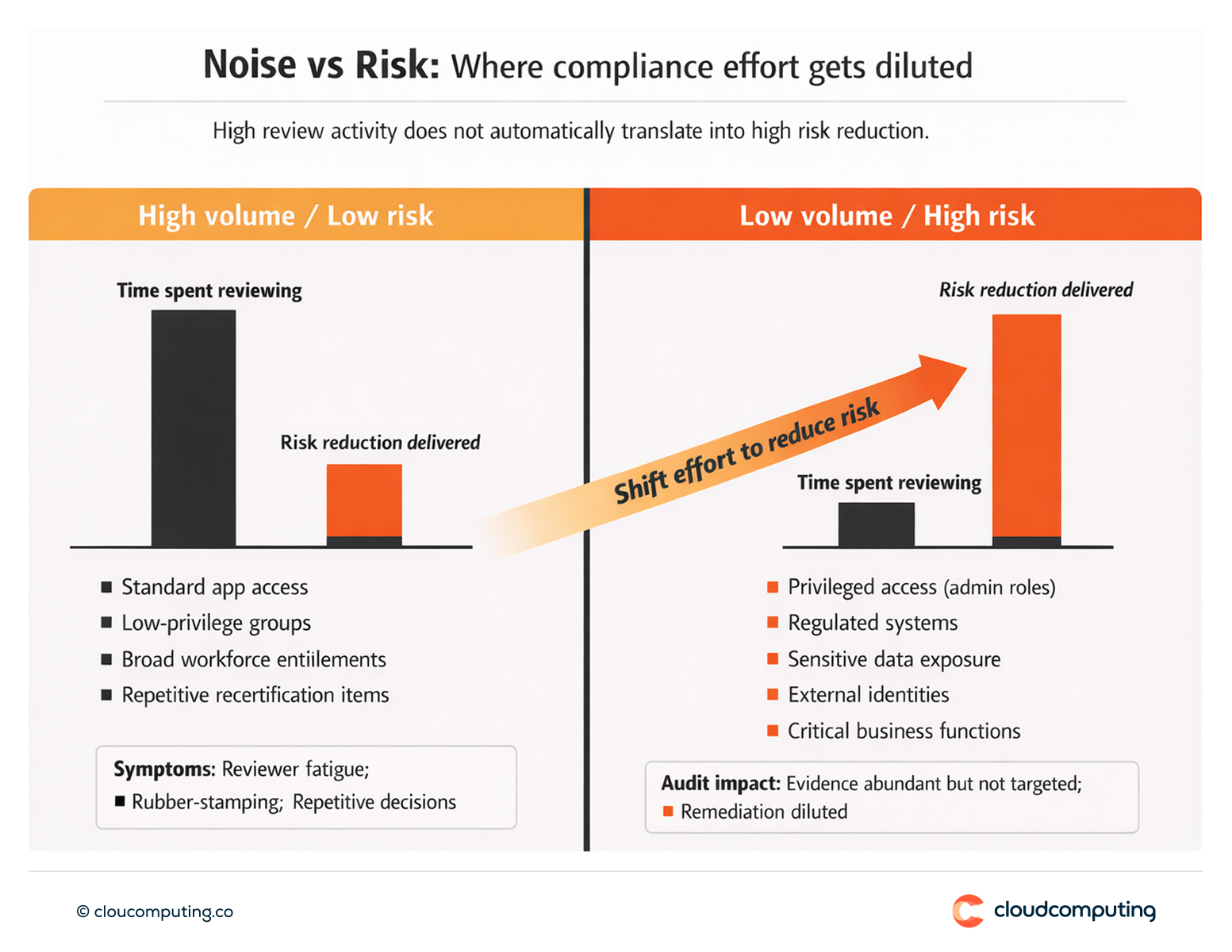
Many compliance programmes spend most of their time reviewing low-risk access while high-impact exposure receives insufficient attention.
Certification campaigns become large and repetitive, reviewers experience fatigue, and decision quality declines.
The organisation ends up with activity that looks like control, but does not consistently reduce risk around privileged access, regulated systems, and sensitive data. Audit readiness suffers because evidence is abundant but not targeted, and remediation effort is diluted across noise.
How we solve it: Prioritise high-risk access and strengthen the compliance process to improve decision quality and audit defensibility
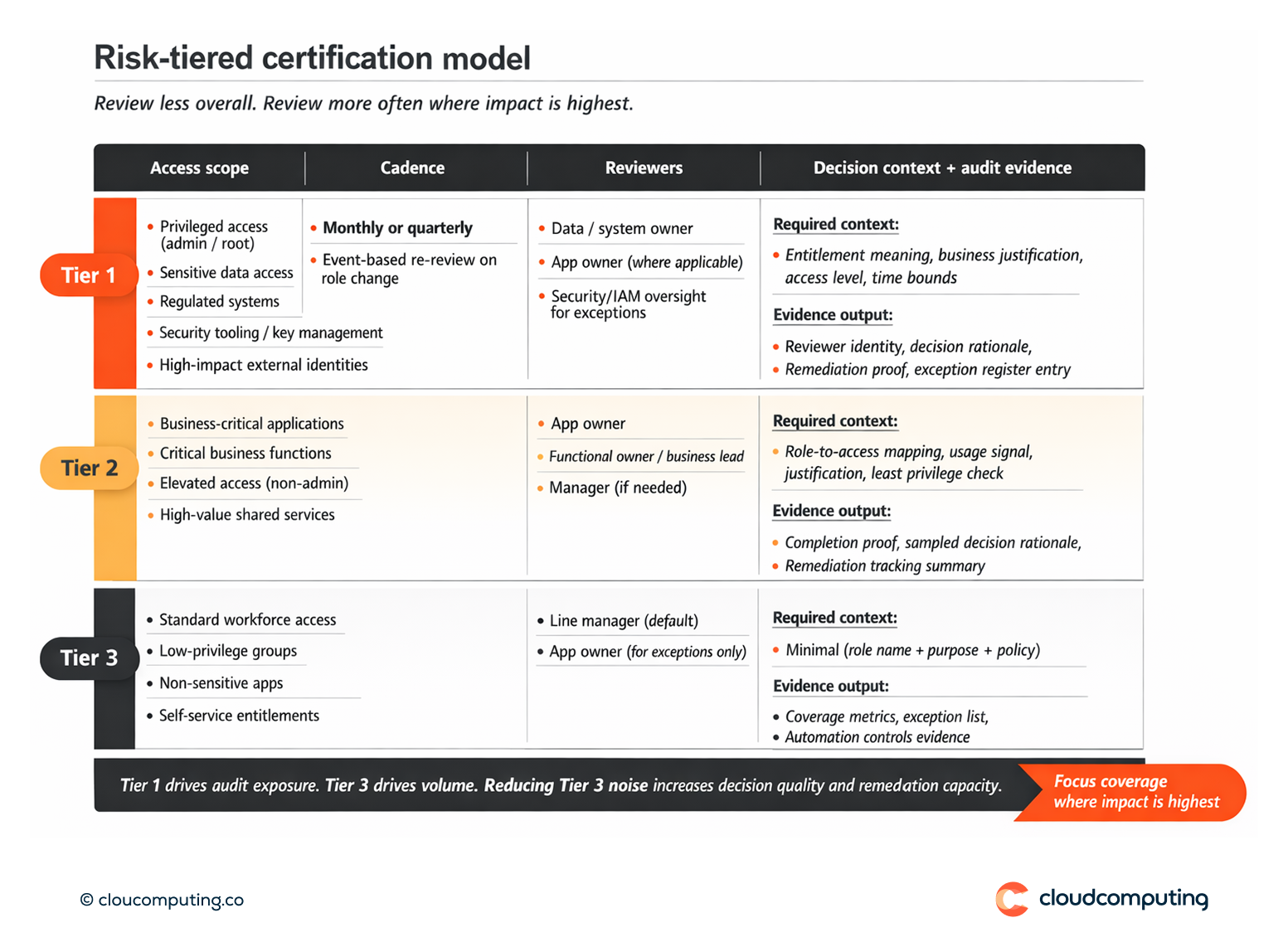
We redesign compliance and certification execution around risk tiers, ownership, and evidence so teams review less, but govern better.
- Risk-tiering that reflects business impact
We define clear tiers for access based on impact: privileged access, regulated applications, sensitive data exposure, external identities, and critical business functions. - Certification scoping and cadence by risk
We reduce low-value review scope and increase frequency where it matters. High-risk access is reviewed more often, with the right owners and stronger decision requirements. - Context-driven decisions
We ensure reviewers understand what they are approving: entitlement meaning, business justification, access level, and time bounds, improving decision quality and reducing rubber-stamping. - Remediation discipline and exception control
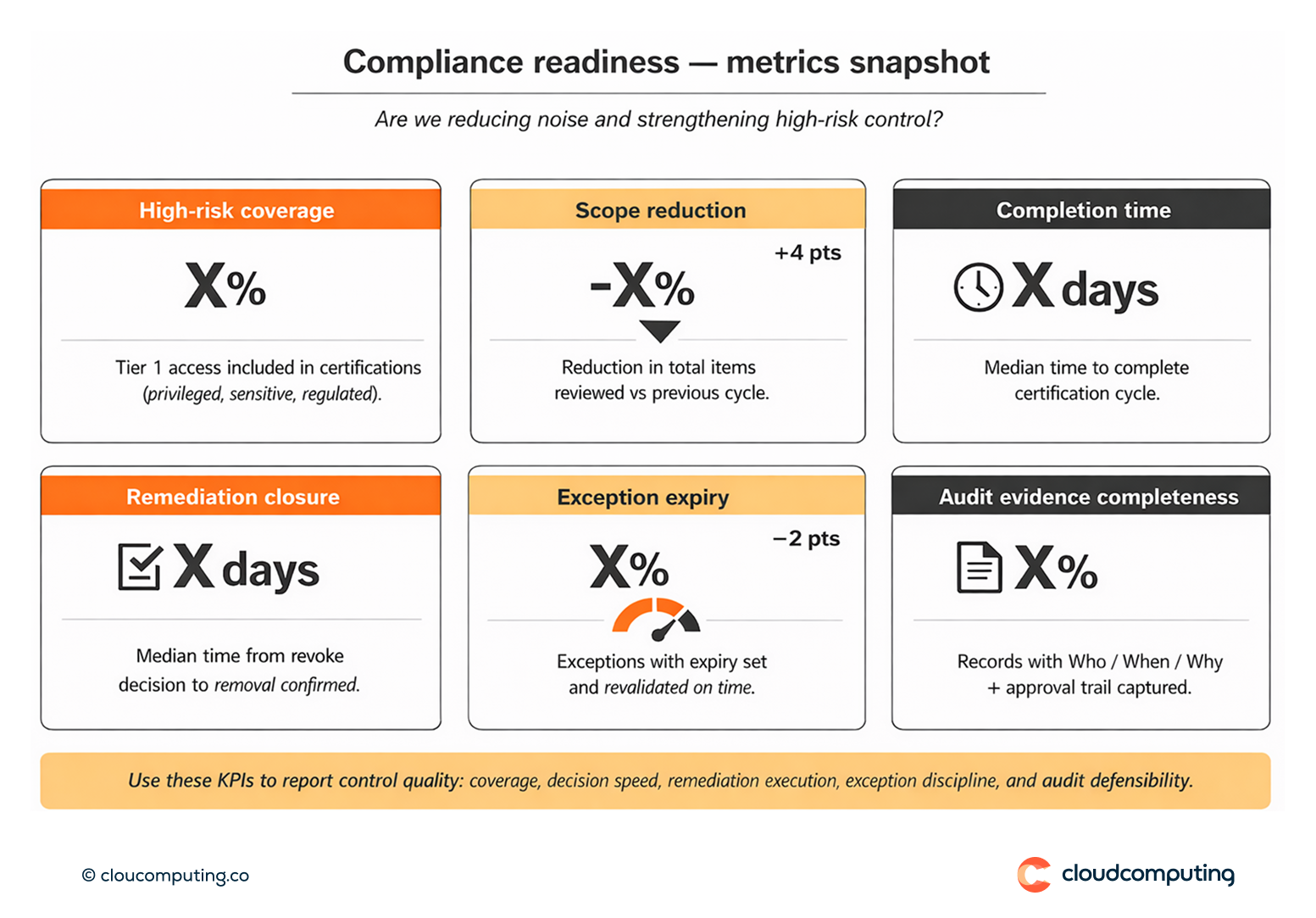
We track revocations to completion, enforce SLAs, and ensure exceptions are time-bound with revalidation requirements. - Audit-ready evidence packs
We standardise reporting to show coverage of the highest-risk access, completion status, remediation proof, and exception governance in a consistent format auditors can use.
Expected outcome
- Stronger certifications focused on privileged and sensitive access, with clearer ownership and defensible decisions
- Less wasted time by removing low-risk noise and reducing campaign scope
- Improved remediation through tracked execution and time-bound exceptions
- Higher audit confidence with evidence aligned to control objectives and risk
Quick Answers
What does “focus on what matters” mean in compliance?
Prioritising review and evidence around access that creates the highest business and regulatory impact: privileged access, sensitive data, regulated systems, and external identities.
Why do large certification campaigns reduce control quality?
They create reviewer fatigue, encourage rubber-stamping, and dilute remediation effort across low-risk noise.
How do risk-based certifications improve audit readiness?
They demonstrate that governance coverage and evidence align to critical controls, with clear ownership, completion, and remediation proof.