The Problem
Identity processes often break at the seams between systems and teams. Joiner-Mover-Leaver events may be handled one way in HR, another in ITSM, and differently again across application teams.
Role changes do not reliably propagate, approvals vary by department, and exceptions become informal “fixes” that never get standardised.
The outcome is inconsistent access, recurring operational failures, slow remediation, and governance gaps that are difficult to explain in audits.
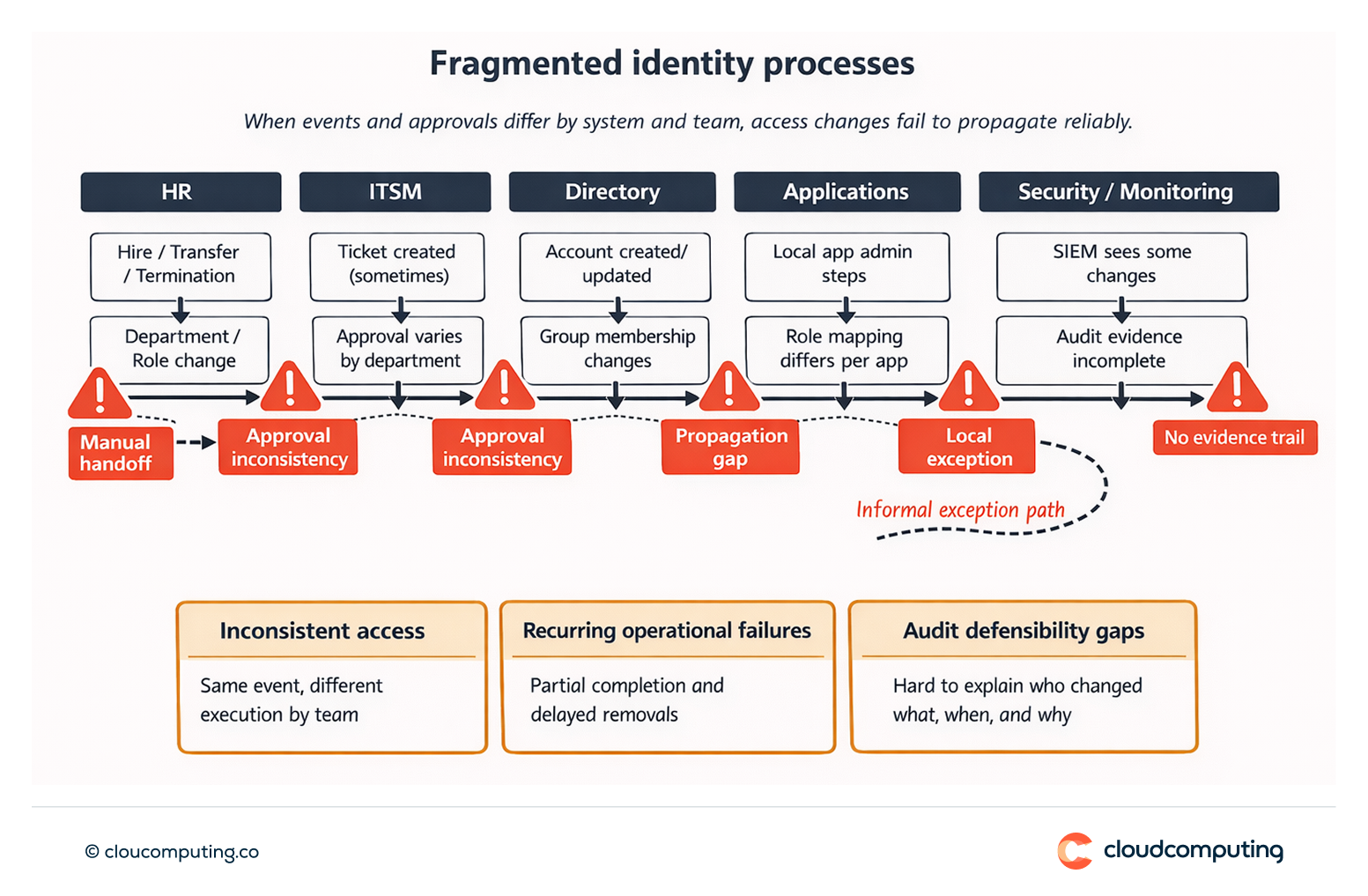
How we solve it: Workflows and automations triggered by identity events to standardise execution across systems.
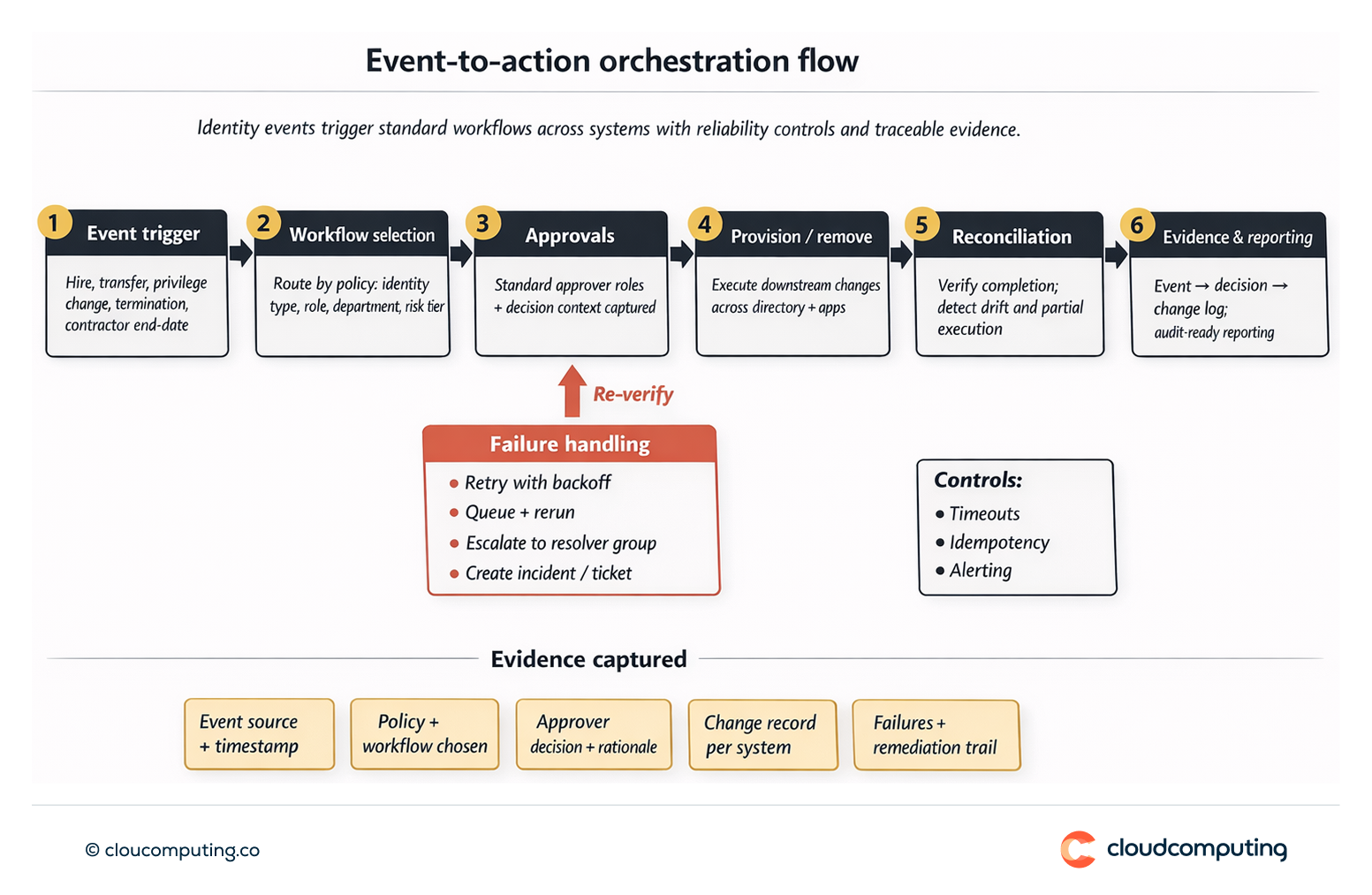
We implement event-driven orchestration so changes in identity state trigger consistent workflows, approvals, and provisioning actions across connected systems, with traceability and operational safeguards.
- Define the event model and triggers
We establish which events matter (hire, transfer, department change, privilege change, termination, contractor end-date, rehire) and define trigger sources (HR, directory, ITSM, application signals). - Standardise workflows across teams
We translate events into consistent workflows: who approves, what gets provisioned or removed, what conditions apply, and how exceptions are handled. - Automate orchestration across systems
We integrate with directories and applications so workflows reliably execute downstream changes rather than creating “approval-only” processes that still require manual fulfilment. - Add reliability controls
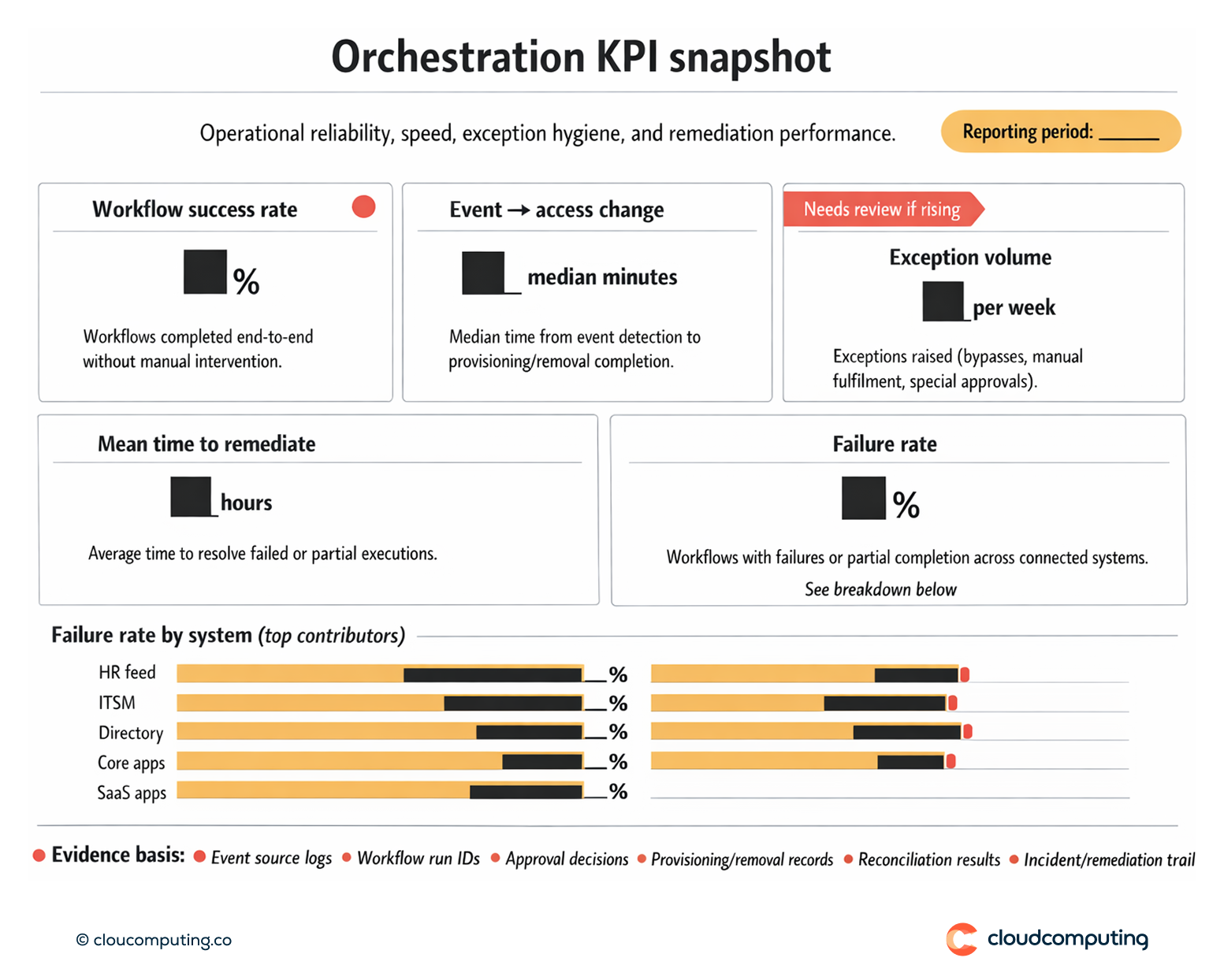
We implement reconciliation, retries, failure handling, and alerting so orchestration does not become another fragile integration layer. - Produce operational and audit evidence
We ensure event-to-action traceability: what triggered the workflow, what decisions were made, what changes occurred, and what remediation happened if failures occurred.
Expected outcome
- Standardisation of identity processes across teams and systems
- Fewer failures through consistent workflows, monitoring, and controlled exception paths
- Greater agility by applying policy changes once and propagating them through event-driven automation
- Improved audit defensibility with traceable event-to-action evidence and consistent reporting
Quick Answers
What is event-driven identity orchestration?
A governance and automation approach where identity events (e.g., role change, termination) trigger standard workflows and access changes across systems.
Why do identity processes become inconsistent?
Because different teams implement local procedures and manual handoffs, and changes are not propagated reliably across all connected systems.
What improves when orchestration is event-driven?
Speed, consistency, and reliability of access changes, plus traceability that supports audits and operational accountability.